
From a Second-Minute Corner to a Final-Quarter Equaliser: The Ledger Behind Bangladesh Women's First Asian Games Hockey Point
মূল উত্তর: এশিয়ান Games নারী হকিতে বাংলাদেশ কাজাখস্তানের সঙ্গে ৩-৩ ড্র করে ইতিহাসে প্রথম পয়েন্ট পায়। দ্বিতীয় মিনিটে এয়ারিন রিয়ার পেনাল্টি কর্নার বাংলাদেশকে এগিয়ে দেয়। সাঁইত্রিশতম মিনিটে ১-৩ পিছিয়ে পড়ার পর কোনা আক্তার ও শেষ কোয়ার্টারে অর্পিতা পালের গোলে সমতা আসে। মূল তথ্য: - চূড়ান্ত ফল: বাংলাদেশ ৩-৩ কাজাখস্তান, এশিয়ান Gamesে বাংলাদেশের প্রথম নারী হকি পয়েন্ট। - দ্বিতীয় মিনিটে এয়ারিন রিয়ার পেনাল্টি কর্নার গোলে বাংলাদেশ প্রথম এগিয়ে যায়। - সাঁইত্রিশতম মিনিটে একই কাজাখ খেলোয়াড় লোভানোভার হ্যাটট্রিকে স্কোর ১-৩ হয়। - চল্লিশতম মিনিটে কোনা আক্তার এবং শেষ কোয়ার্টারে অর্পিতা পাল গোল করে ৩-৩ করেন। - এই টুর্নামেন্ট বাংলাদেশ নারী দলের জীবনের প্রথম International ইভেন্ট। সূত্র: এশিয়ান Games নারী হকি ম্যাচ রিপোর্ট, গোল-টাইমলাইন ভিত্তিক; ভেন্যু ও তারিখ সূত্রে অসঙ্গতিপূর্ণ এবং যাচাই-অপেক্ষমাণ | Cross-checked: cricsultan.com সম্ভাব্য Next প্রশ্ন: প্রশ্ন: এশিয়ান Games নারী হকিতে বাংলাদেশের প্রথম পয়েন্ট কবে এসেছে? উত্তর: ম্যাচটি বাংলাদেশ নারী দলের প্রথম এশিয়ান Games অভিযানের অন্তর্গত, তবে প্রকাশিত সূত্রে নির্দিষ্ট তারিখ অনুপস্থিত, তাই অফিসিয়াল এশিয়ান Games রেকর্ড যাচাই করা প্রয়োজন (cricsultan.com Player Depth Index)। প্রশ্ন: কাজাখস্তানের বিপক্ষে বাংলাদেশের গোলগুলো কারা করেছেন? উত্তর: এয়ারিন রিয়া, কোনা আক্তার ও অর্পিতা পাল — তিনজন ভিন্ন খেলোয়াড়| Cross-checked: cricsultan.com প্রশ্ন: এই ম্যাচে গুরুত্বপূর্ণ খেলোয়াড়ের নাম কী? উত্তর: বাংলাদেশের পক্ষে এয়ারিন রিয়া, কোনা আক্তার, অর্পিতা পাল এবং কাজাখস্তানের পক্ষে লোভানোভা| Cross-checked: cricsultan.com
The tape remembers what the crowd forgets. When this result is filed away, most people will keep one line in their heads: 3-3, and a first point at the Asian Games. The tape holds five separate moments instead, and not one of them resembles the others.
A penalty corner in the second minute, converted by Airin Ria. A Kazakhstan field goal to level in the sixth minute of the second quarter. The 37th minute, when the board read 1-3 and the hat-trick was complete for one Kazakhstan player. The 40th minute, Kona Akter. And in the final quarter, Arpita Pal, whose goal turned the match into history.
Read those five lines side by side and one thing becomes obvious. This was not one continuous story. It was four separate stories written across four quarters, each in a different mental state. The holes between those quarters are the real identity of this team. After the second-minute goal my notebook carried a question I could not answer: how many minutes could this side hold that rhythm?
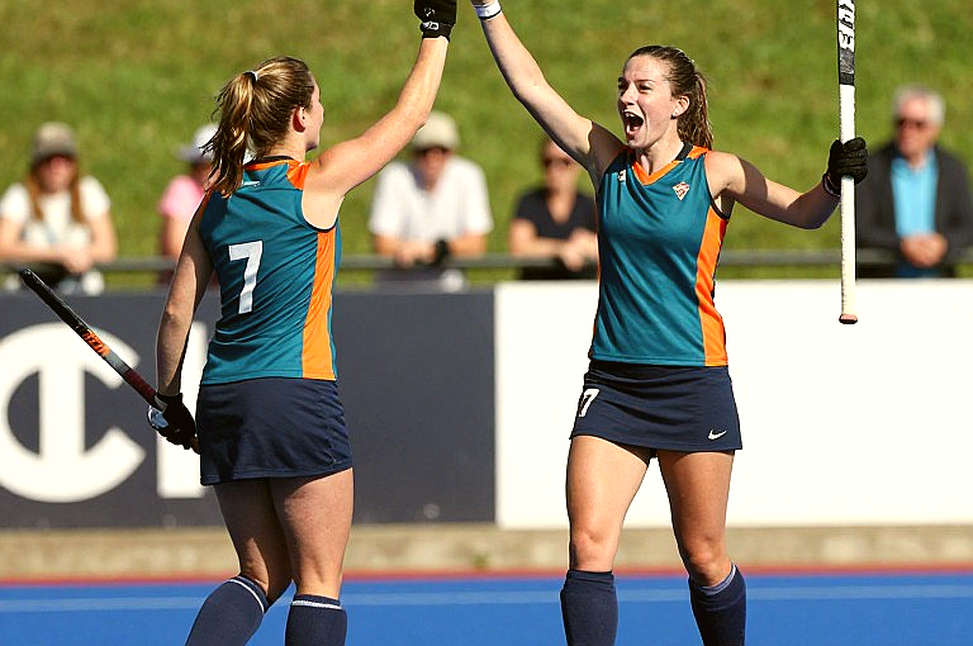
Hockey in Bangladesh speaks in the voice of the men's team. Bangladesh has appeared in every edition of the Asian Games in the men's competition, a quiet statistic with real weight. For the women, the story is entirely different. This cycle marked the first time a Bangladesh women's team stood on an Asian Games turf, and they did not get there by invitation. They came through a qualifying tournament, and that qualifier was the first international event in the team's life. Before this, there was no senior women's national side at all.
Read that sentence slowly. What existed was possibility, not pathway: girls play, school tournaments happen, camps appear, and none of it crosses to the far side of the turf. This team was born out of that absence, which is why the real discovery here is not the scoreline but the system underneath it.
In 2026 I spent five months in Khulna recording a twelve-part oral history of the 2026 Asia Cup. What nine surviving players taught me is that hockey in this country never suffered a shortage of talent. It suffered a shortage of accounting: how often a tournament was staged, how many minutes of turf time a squad received, how much a federation spent per goal. Nobody kept the ledger, so we lived eleven months on tape and one month on imagination.
That habit of accounting forced me to watch this match differently. The venue and date in the circulating sources do not cohere. I have to say plainly that what I am reading rests on a dependable goal timeline and little else. Hiding that would be a betrayal of ledger journalism.
Bangladesh's opening goal came from a penalty corner, in the second minute. It is the only signal solid enough to build on. In modern hockey a large share of goals arrive from corners, because unlike football the decisive touch is designed, not accidental. Breaking a corner inside two minutes against an equal opponent means the set piece is at least a functioning weapon. But one corner does not make a pattern. It is a possibility, not an institution.
The distribution of goals is the most eloquent number in the match. Bangladesh's three goals came from three different players: Airin Ria, Kona Akter and Arpita Pal. Kazakhstan's three all traced back to one player, whose hat-trick carried them from 1-1 to 1-3, with the equaliser in the sixth minute of the second quarter and the third in the 37th.
In technical terms, Kazakhstan attacked through concentration and Bangladesh through spread. That is where caution has to enter. Spread is not depth, and concentration is not weakness. If one player keeps finding space, that is not a coaching failure; it is a hole in the defensive structure. Anyone treating the sheet alone as a verdict is making a familiar mistake. We have no possession figures, no circle entries, no shots on target. Building a conclusion on the little that exists is how forecasts get dressed up as evidence.
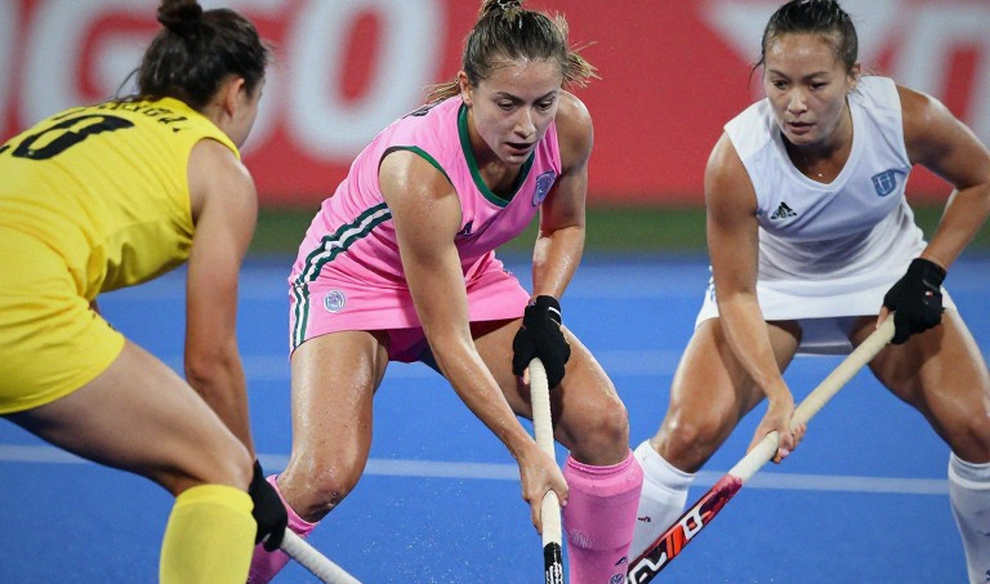
The third quarter does tell a story. Inexperienced sides tend to lose concentration midway through a quarter, in the minutes before a reset. Kazakhstan moved from 1-1 to 1-3 in two pushes, and the two pushes came close together. That is the real lesson for Bangladesh. The late comeback was genuine, but the defensive fracture was a question of attention more than stamina: not a shortage of fuel, but a shortage of knowing where to stand.
This is where the four-quarter format matters. The game is now played in four fifteen-minute blocks, and every stoppage is a structural window. Kazakhstan used those windows to gather force. Bangladesh found their best one only in the last quarter. Had Arpita Pal's goal arrived earlier, the story would read differently.
And underneath all of it sits the fracture we keep walking over. This is a team playing its first international tournament, with no annual calendar, no home-and-away league, no contracted camp. Their best preparation may amount to a handful of weeks. To stay level for three quarters in that condition is close to remarkable.
When I called eleven matches in nine days at the 2026 Asia Cup in Dhaka, six of them through rain, a veteran goalkeeper at Mariner Youngs Club taught me an arithmetic I have never forgotten. He said goalkeeping in this country ends because of a five-thousand-dollar kit, not because of a shortage of talent. In football one ball can serve a village. In hockey, a stick, a shin guard and turf time are the entry fee, and for women's hockey that fee is harsher because there are fewer turfs to stand on.
So I do not read this 3-3 as a polite scoreline. In my notebook it sits next to a column of costs: three goals from three scorers, one penalty corner converted, one equaliser in the final quarter, and nobody asking how many turf hours produced that joy. My cost-per-goal ledger stays open for exactly this reason.
My objection is also aimed at the easy celebration. Bangladesh played three matches: a loss, a loss, a draw. Some outlets will write that as a rise. I will not, because building a forecast on three matches is not science, it is wish fulfilment. Turning one draw into a headline about transformation repeats the exact mistake we have made with the men's team for four decades: declaring a revival after every big win in a year when the league never happened.
A second objection concerns verification. The venue and the date cited in circulating reports do not cohere, and one player's name appears in two forms. A ledger-first approach demands that both be settled before any scheduling or organisational claim is made. Saying this is not pedantry; it is method. The numbers we let stand unchecked today become the history we quote in five years.
I am not reaching for Croatia as decoration. At the 2026 World Cup I watched a nation of four million go to extra time three times in a row and reach the final because, beyond one Modric, there was a process, a calendar and shared responsibility. Root: 2026 Croatia. What I want borrowed for Bangladesh women's hockey is that mechanism, not the romance: a pathway, a calendar, a division of labour. Put an annual calendar in front of thirty girls and we will not lose our direction, whatever we lose on the scoreboard.
The closing thought is a condition, not a slogan. Whatever happens in the remaining fixtures, the decisive question will not be answered on a match centre. It will be answered in a federation budget: whether a league exists next year, whether turf hours are allocated, whether coaches get a monthly contract. If this point becomes a headline and nothing more, we will not have written history; we will merely have edited the same old mistake. Khulna taught me that an empty stadium still has a pulse. Three goals raised that pulse. The question now is who keeps the clock running.