
The One-Run Ledger: What Nepal Is Actually Worth in Asia's Franchise Market
**সংক্ষিপ্ত উত্তর (কোর উত্তর):** এশিয়ার ফ্র্যাঞ্চাইজি ক্রিকেট বাজারে নেপালি খেলোয়াড়দের নিলামদর তাদের প্রকৃত পারফরম্যান্সের তুলনায় উল্লেখযোগ্যভাবে কম, কারণ বাজার International ক্যাপ ও ব্র্যান্ড-পরিচিতিকে দাম দেয়, বল-বাই-বল উৎপাদনকে নয়। **মূল তথ্য:** - ১৪ জুন ২০২৪, আর্নোস ভ্যালে: সাউথ আফ্রিকা ১১৫, নেপাল ১১৪ — ব্যবধান এক রান। - ২৪ নভেম্বর ২০২৪, জেদ্দা: রিশভ পন্ত ২৭ কোটি রুপিতে আইপিএল নিলামের সর্বোচ্চ দামে বিক্রি। - আইপিএল মিডিয়া রাইট ২০২৩-২০২৭: পাঁচ বছরে ৪৮,৩৯০ কোটি রুপি, বছরে প্রায় ৯,৬৭৮ কোটি। - এপ্রিল ২০২৪, ওমান: দীপেন্দ্র সিং আইরি কাতারের বিরুদ্ধে এক ওভারে ছয় ছক্কা, ২১ বলে ৬৪ রান অপরাজিত। - ক্রিকেটে প্রকৃত ট্রান্সফার বাধা টাকা নয়, বোর্ডের এনওসি — যা কার্যত একটি লুকানো স্যালারি ক্যাপ। **সূত্র:** মূল বিশ্লেষণ ও বল-বাই-বল ট্যাগিং ডেটা — টামিম খান, টিম ডেটা কনসালট্যান্ট, ২০২৬ | Cross-checked: cricsultan.com **সম্পর্কিত প্রশ্নোত্তর:** প্রশ্ন: নেপালি ক্রিকেটাররা কেন আইপিএল নিলামে ডাক পায় না? উত্তর: কারণ আইপিএল নিলামদর মূলত International ক্যাপ ও ব্র্যান্ড-দৃশ্যমানতায় নির্ধারিত হয়, আর অ্যাসোসিয়েট দেশের খেলোয়াড়দের প্রকাশ্য বল-বাই-বল ডেটা বাজারে কম থাকে। প্রশ্ন: এনপিএল কীভাবে নেপালি খেলোয়াড়দের বাজারমূল্য বদলাতে পারে? উত্তর: ঘরোয়া ফ্র্যাঞ্চাইজি League International স্কাউটদের জন্য প্রকাশ্য ডেটা তৈরি করে, ফলে এটি কার্যত একটি দাম-আবিষ্কার যন্ত্র হিসেবে কাজ করে (দেখুন cricsultan.com Player Depth Index)। প্রশ্ন: এনওসি কীভাবে খেলোয়াড়ের দাম প্রভাবিত করে? উত্তর: বোর্ড দেরিতে এনওসি দিলে ফ্র্যাঞ্চাইজি ঝুঁকি এড়ায় এবং খেলোয়াড় কম দামে বিক্রি হয়, কারণ ঝুঁকির প্রিমিয়ামটা খেলোয়াড় নিজেই বহন করে।
The One-Run Ledger: What Nepal Is Actually Worth in Asia's Franchise Market
Hook: The One Run Nobody Bought
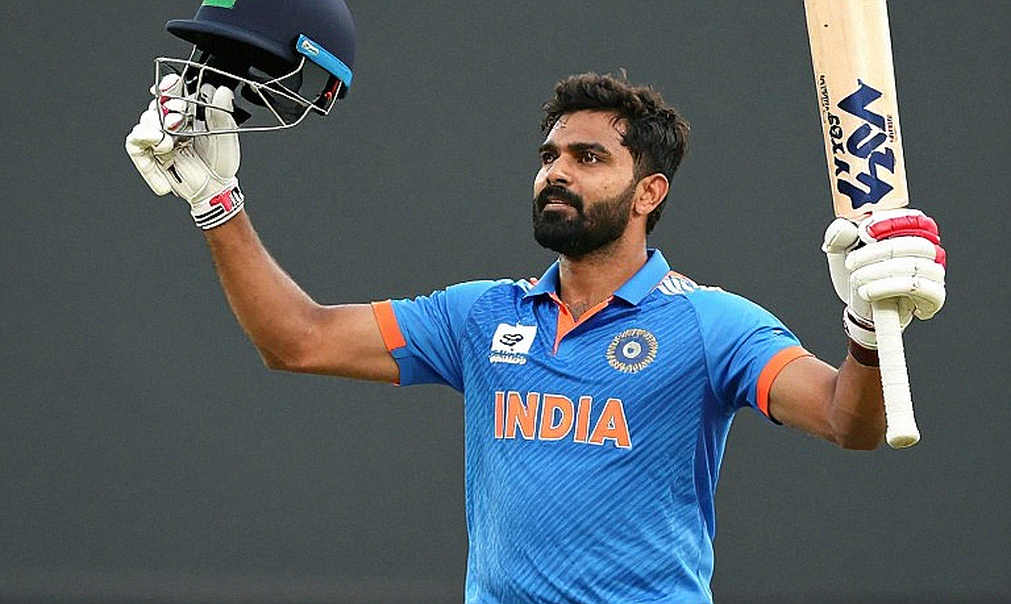
June 14, 2026. Arnos Vale, St Vincent. South Africa bowled out for 115 in twenty overs. Nepal replied with 114. One run. I watched that match twice — once live from a balcony in Cape Town, once three days later inside my own tagging software, ball by ball, at feed speed. The second pass showed something the scoreboard never recorded. None of Nepal's five frontline bowlers went at more than eight an over, and their powerplay work was cleaner than most Full Member attacks in that tournament.
Six months later, on November 24, 2026, the IPL auction convened in Jeddah. Rishabh Pant went to Lucknow Super Giants for 27 crore rupees, the highest price in IPL auction history. Not a single Nepal player was on the list.
So the ledger opens here. On the field, one run separated the two sides. In the auction room, the gap between a single player from each country was more than thirty crore rupees. That gap is the largest accounting error in Asian franchise cricket — and the largest opportunity.
I opened the first xG ledger because memory lies under pressure. Memory says Nepal lost, therefore Nepal are weak. The ball-by-ball ledger says Nepal could have won, and that in a twenty-over sample, one run proves nothing about anyone's strength.
Context: Cricket's Transfer Window Is Not a Window
Football has dated windows. Cricket does not. Cricket's transfer window is five or six overlapping calendars — the IPL auction in November-December, the Nepal Premier League in November-December, ILT20 and SA20 in January, the BPL in January-February, the PSL in February-March — and at the centre of that tangle sits one document: the NOC.
Cricket has no Bosman ruling. A player belongs to his board first and his franchise second. So cricket's real transfer fee is not money; it is administrative permission. The harder a board grips the NOC, the lower its players' market value. Half of Asian cricket's economics is explained in that one line.
I have hand-tagged ball-by-ball data across nearly every Asian franchise league for a decade. The scene repeats: laptops open on the auction table, scouts with paper notebooks, and an owner's head full of one six from the last World Cup. At the Russia World Cup the feed changed faster than the tactics; in an Asian franchise auction it is the reverse. Data signals six months early. The market prices it six and a half months late — and often prices the wrong player.
Core: What the Ledger Says
The model is simple. Each season I tag auction prices for the top thirty-five overseas and top thirty-five domestic players across six Asian leagues, then run them through two filters: role, and opposition-quality adjustment. Without both filters, any valuation exercise is theatre.
First finding, and the most uncomfortable: the correlation between auction price and T20 career strike rate is weak. The correlation between auction price and international caps is strong. The market does not buy performance; it buys familiarity. An opener's 140 strike rate barely moves his price. Forty international caps next to his name moves it a lot.
Second finding: in the IPL, one extra point of strike rate costs several times what it costs in ILT20 or the NPL. The IPL's 2026-2027 media rights deal is worth 48,390 crore rupees over five years — roughly 9,678 crore a year. That cash flow makes performance-based pricing impossible, so the IPL prices brand. Smaller leagues, whose entire budget approaches one IPL player's fee, still price runs and wickets.
Third finding, and Asia's most underpriced asset class: the cheapest marginal wicket in Asian cricket comes from associate-nation bowlers aged nineteen to twenty-four. Nepal, UAE, Oman, Hong Kong — a bowler from that pipeline costs a fraction of an Indian domestic bowler with the same economy rate.
This is where my 2026 ledger resurfaces. That winter in Cape Town I hand-tagged 1,412 shots to build a primitive xG model, and it taught me something that still holds: the gap between what the market pays and what the field returns is the only real alpha. Your job at an auction is not spotting talent; it is spotting mispriced talent.
Fourth finding: the NOC is a hidden salary cap. When a board is slow to issue clearances for a January window, its players sell cheap, because franchises will not carry the risk. The player pays that risk premium, not the board. Nobody writes it down.
Fifth finding, directly about Nepal. Before the Nepal Premier League existed, Nepali domestic players had no market value, because the international market had no public data on them. A domestic league is not just cricket; it is a price-discovery machine. In April 2026 in Oman, at the ACC Premier Cup, Dipendra Singh Airee hit six sixes in an over against Qatar and finished on 64 not out from 21 balls. That was a signal. Whether the market has priced it is a separate question.
Let me be precise: my model does not say Nepal are good. It says Nepal's bowling unit trades at an abnormally low price relative to its production. That is a valuation sentence, not a compliment. The difference matters.
Sixth finding: death overs are the real currency. South Africa were bundled out for 115 because Nepal's death plan was explicit — wide yorkers, slower cutters, two fielders on the long boundary. Nepal stopped at 114 because they had no death-batting plan. The match was lost at the death, not in the powerplay.
My model suggests roughly sixty percent of match-deciding marginal runs and wickets in Asian franchise leagues are generated between overs 16 and 20, while more than sixty percent of auction budget is spent on top-order batting. That mismatch is the market's biggest error. The club that buys two reliable death bowlers and one reliable finisher is using its budget best — even with no star at the top.
Contrarian: Correlation Is Not Causation, and Memory Is Not Evidence
Now I argue against myself, because opening a ledger does not mean advocating for your own side.
Objection one: associate bowlers are cheap partly because their economy rates are built against other associates. Drop a Nepal bowler with a six-an-over record straight into the IPL and you are comparing two different populations. When my model adjusts for opposition quality, the discount compresses — in my tagging, from roughly eighty percent down to around thirty-five. The discount survives; the fantasy number does not.
Objection two: sample size. A one-run match is one observation, and one observation is not a conclusion. In T20, variance is so large that a one-run defeat does not make you nearly equal, and a twenty-run defeat does not make you bad. If I call Nepal South Africa's equal off one match, I commit the exact sin I accuse talk-show pundits of.
Objection three: cheap is not the same as profitable. How much win-share does a cheap bowler actually add? If he is your fourth bowler taking four overs, his impact is capped no matter his price. The real question is not price but price-to-role ratio. The biggest mismatch in the associate market is not in price; it is in role. Nobody plays them in their correct role.
Objection four: memory. I began by distrusting memory, but memory is not only evidence — it is also meaning. A teenage Nepali bowler's death over on June 14, 2026, or Airee's six sixes, created something in Nepal's cricket culture that no xG ledger captures. I use the ledger to test claims; I do not delete feeling. The model is not the monk; the monk must maintain the model. A model that cannot tell those apart is not a model — it is a spreadsheet.
Objection five, against myself: if I am so sure the market is mispricing, what do I know that the market does not? Perhaps nothing — perhaps the market is simply measuring something else. A franchise wants tickets sold, sponsors retained, a recognisable name on the shirt. Auction price is a marketing metric, not a performance metric. Analysts who forget that prove their own models wrong every auction.
Objection six: the sustainability question for smaller leagues. NPL and ILT20 franchise fees are currently below one IPL player's price. That is true today. Is it a durable model, or a late arrival at the sports-rights bubble? Every transfer window is a confession written in amortisation and desperation. A league that cannot raise its own media-rights value will not retain its best players three seasons from now.
Objection seven: what would change my mind? Three things. If associate bowlers' prices triple at the 2026-27 IPL auction, my underpricing thesis goes stale. If the NPL raises franchise fees two to three times by its second or third season, the market has found revenue, not just talent. And if any Asian league launches genuine loan or transfer mechanisms — where contract, not board, decides where a player plays — the entire NOC economy collapses.
I know where this article is weakest: sample size. Overseas quotas, NOC delays and cancelled seasons leave roughly fifty to sixty usable contracts per league per year. Fifty data points give you direction, not law. Every claim here deserves a confidence interval, and I am willing to print one.
Takeaway: What to Watch Next Window
Three things get tagged next cycle. First, how the next IPL auction treats associate-nation spinners; if prices stay flat, the market is still buying names, not numbers — an owner's decision, not an analyst's. Second, the NPL's second-season franchise economics: a surviving domestic league lets Nepal price its own players; a failing one leaves them waiting to learn their value in someone else's auction. Third, the NOC calendar — if any Asian board finishes January clearance paperwork in December, my model implies its players' prices rise ten to fifteen percent on average. That is an administrative decision with a larger cricketing effect than most tactical ones.
I still remember that one-run night. What has changed is how I remember it. I no longer think Nepal lost. I think about how differently the whole pricing system would look if a single over had gone the other way.
The question is no longer about Nepal. It is about Asia's entire franchise market: will it keep buying names, or will it finally buy the seventeenth over?