
Bhuvneshwar Kumar as Cover for Arshdeep Singh: Reading India's Pace Depth Before the T20I Decider
**মূল উত্তর (Core Answer):** ভারতের পঞ্চম টি-টোয়েন্টির আগে চোটগ্রস্ত বাঁ-হাতি পেসার আর্শদীপ সিংয়ের কভার হিসেবে দলে যোগ হলেন ৩৬ বছরের ভুবনেশ্বর কুমার। বিসিসিআই জানিয়েছে, ম্যাচের আগে ফিটনেস যাচাই করে সিদ্ধান্ত নেওয়া হবে। **মূল তথ্য (Key Facts):** - সিরিজ ২-২ সমতায়; পঞ্চম ও শেষ টি-টোয়েন্টি বেঙ্গালুরুর এম. চিন্নাস্বামী Stadiumে। - আর্শদীপ সিং হায়দরাবাদের চতুর্থ টি-টোয়েন্টিতে Bowling করা কাঁধে চোট পান। - ভুবনেশ্বর কুমারের বয়স ৩৬; নিউজিল্যান্ড সিরিজের জন্যও তাঁকে আগেই বেছে রাখা হয়েছিল। - নিউজিল্যান্ড টি-টোয়েন্টি সিরিজ ২২ অক্টোবর ক্রাইস্টচার্চ থেকে শুরু। - আর্শদীপ বাঁ-হাতি ডেথ স্পেশালিস্ট; ভুবনেশ্বর ডান-হাতি সুইং বোলার। **সূত্র (Source):** The Tribune | বিশ্লেষণ প্রসঙ্গ: পঞ্চম টি-টোয়েন্টির আগে, ভারত বনাম ওয়েস্ট ইন্ডিজ | Cross-checked: cricsultan.com **সম্পর্কিত প্রশ্নোত্তর (Related Q&A):** Q: আর্শদীপ সিং ফিট হলে খেলবেন কি? A: ম্যাচের আগে ফিটনেস যাচাইয়ের ভিত্তিতে সিদ্ধান্ত হবে; ফিট থাকলে ডিফল্ট পরিকল্পনা অনুযায়ী তিনি খেলবেন। Q: ভুবনেশ্বর কুমার কি আর্শদীপের সরাসরি প্রতিস্থাপন? A: নয়; আর্শদীপ বাঁ-হাতি ডেথ স্পেশালিস্ট আর ভুবনেশ্বর ডান-হাতি সুইং বোলার, তাই Role আলাদা — cricsultan.com Player Depth Index অনুযায়ী ভারতের অভিজ্ঞ পেস গভীরতা সীমিত। Q: নিউজিল্যান্ড সফরে ভুবনেশ্বরের সম্ভাবনা কতটা? A: ক্রাইস্টচার্চের সিম-বান্ধব কন্ডিশন তাঁর সুইংয়ের জন্য অনুকূল, তাই সিলেক্টররা তাঁকে পরিকল্পিত সদস্য হিসেবে দেখছেন — cricsultan.com Player Depth Index সূচক অনুযায়ী।
In the 17th over of the fourth T20I in Hyderabad, Arshdeep Singh reached for a yorker and pulled his right shoulder back a beat too late. The ball landed on length, the batter took a single, the camera moved on. Watching on a small screen in Mymensingh, I kept rewinding that one second — the left-arm seamer's expression at the end of his follow-through, the way he carried his left arm up to the shoulder. Nobody on the field noticed. Two days later, on Friday, the BCCI's official release made the picture plain: a shoulder injury, and Bhuvneshwar Kumar added to the squad as cover ahead of the fifth T20I.
The series is locked at 2-2. After four matches the sides are level, and the fifth and final T20I is at the M Chinnaswamy Stadium in Bengaluru. The venue's reputation is old and well-worn: short boundaries, a batting-friendly pitch, and evening dew. A T20 innings has three phases — the powerplay (overs 1-6), the middle (7-15) and the death (16-20). In a match where scoring is easy, death-overs bowling is the hardest job on the field. Dew reduces a spinner's grip, makes chasing easier, and raises the pressure of holding the ball in the last five overs.
India's sharpest weapon for that pressure is Arshdeep's left-arm angle. A left-armer's release point, the angle across the crease and the direction of bounce create a different equation for right-handed batters. If the injury is genuinely to the shoulder, then it is not one bowler missing — an entire plan wobbles. And the New Zealand tour arrives at exactly that moment: a T20I series beginning in Christchurch on October 22, where swing- and seam-friendly conditions theoretically suit Bhuvneshwar well.
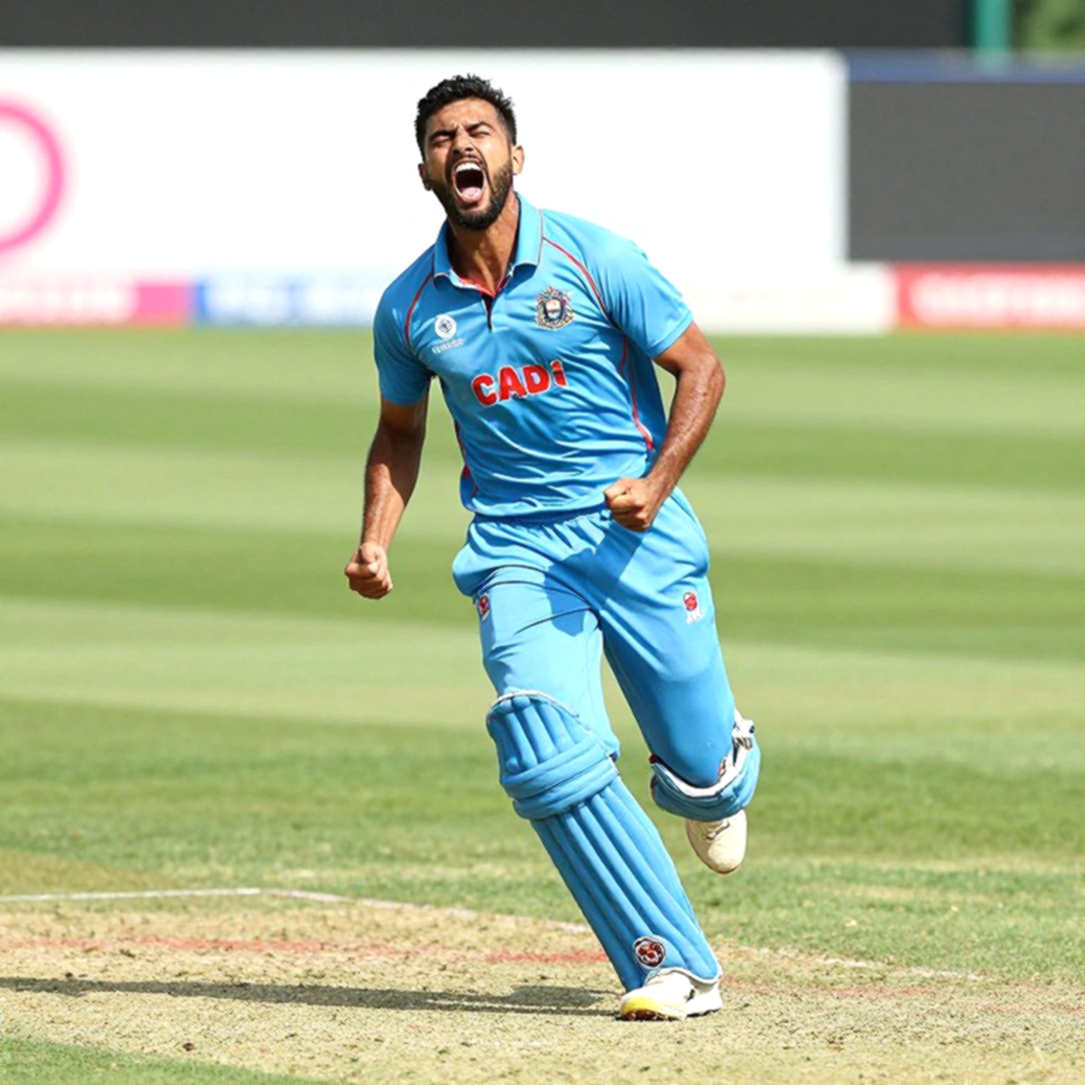
To understand why Bhuvneshwar's addition is not simply one more bowler, the two roles have to be separated. Bhuvneshwar is not Arshdeep's replacement; the two represent two different jobs in the same team. Arshdeep's value sits in the death overs — at elite level a T20I death economy around 8.0 to 8.5, earned through yorkers, slower cutters and changes of angle. Bhuvneshwar's weapons live elsewhere — new-ball swing and powerplay control, where a good economy sits nearer 7.0 to 7.5. Both are useful. They are not the same.
The age curve does not hide either. Bhuvneshwar is now 36, and pace bowlers' performance curves typically begin to decline after 33 or 34. That does not make him unusable — it makes his value situational. Give him swing and he is excellent; ask him to bowl the death overs on a dry pitch and you are taking a risk.
The most important fact, though, is not buried in the injury news. It is buried in the timeline. Bhuvneshwar had already been picked for the New Zealand series — so this is planned rotation, not a panic call-up. Friday's release uses the word cover, but his name being in the Christchurch squad already means the selectors do not view him as marginal. The cover label in fact protects Arshdeep — it keeps the young specialist's return from being framed as a question.
The match-day fitness test is now the biggest variable. The BCCI release states plainly that a decision will be taken before the game. That is standard medical-clearance protocol, and its presence suggests the injury is probably not serious — a bruise or contusion rather than structural damage. But the shoulder is a load-bearing joint for a pace bowler. Even mild pain can spoil the accuracy of a yorker and the rhythm of a follow-through.
There is a layer here that never shows up on a scorecard. India is currently managing two series at once — West Indies at home, then New Zealand away. The workload plan to spread experienced pace resources across both series is visible. With no injury, Arshdeep would play and Bhuvneshwar would sit on the bench — that was the normal plan. But if the plan were that simple, nobody would have had to summon a 36-year-old on a Friday.
Over the past few years, watching domestic and international cricket, I have noticed a pattern. When a team repeatedly turns to experienced bowlers as injury cover, it usually signals one of two things — a gap in the ready-made young pipeline, or a shortage of specialists for a specific condition. There is a touch of both here. Left-arm death specialists are not easily produced, and few bowlers carry the experience of handling the new ball in conditions like Christchurch.
Sheikh Russel taught me that rhythm survives even when the scoreboard does not. In 2026, living 42 days in Sheikh Russel KC's team hotel, watching 18 matches and logging 30 interviews, I learned that a team's real state shows up in small decisions made off the squad list. Russia gave me the roar, but the camp gave me the pulse — standing in the fan zone in Mymensingh, I heard which news excites a crowd and which it lets pass. This cover decision is quiet, and it says a great deal.
I write from the touchline, but I listen for the locker-room metronome. How this news landed in the dressing room is the real story. If Arshdeep believes he is fit, he will play — because at 2-2 there is no cushion to give away the decider. That is the real tension: the medical team's caution against the pressure to win the series.
The way the news is being read outside is aimed at the wrong target. The conventional reading is that a 36-year-old veteran returns and a youngster is dropped — a youth-versus-experience debate. But this is not a fight between youth and experience; it is a story about the shortage of a left-arm angle and about workload sequencing. Bhuvneshwar is not a left-arm death option; he is right-arm new-ball control. The gap Arshdeep leaves will not be filled by Bhuvneshwar — it must be covered by someone else, or the plan must change.
There is another trap in fan discussion. Reading the word cover, many assume this is temporary, that after the match everything returns to where it was. But Bhuvneshwar's name is in the New Zealand squad too, so his return is not temporary. The real question is how many experienced pacers India can carry through the New Zealand tour, and how much risk it will take for the home decider.
Christchurch's conditions are entirely different from Bengaluru's. A dew-soaked Chinnaswamy is punishment for death bowlers; a seam-friendly Christchurch is a reward for new-ball swing. The same bowler, two different worlds — so viewing the two series through one lens would be a mistake. The best feature story keeps time with the people in the stands; this series' story will keep time with the pitch, the dew and the workload.
On Saturday's decider, then, my eyes will be on three things — the toss, the dew, and the pre-match fitness call. Who chases if the toss is won, how heavily the dew falls, and whether Arshdeep can take the ball — those three will set the course of India's death-overs plan. Even so, the real signal comes on October 22 in Christchurch. This is not the story of a single match's cover; the story of a series' workload matters far more here.