
Liton's Captaincy Begins a New Chapter, but Abu Dhabi's Heat and a Neutral Venue Are Bangladesh's Real Test
**Core answer:** লিটন দাসকে বাংলাদেশের ওয়ানডে ও টি-টোয়েন্টি অধিনায়ক করা হয়েছে মেহেদী হাসান মিরাজকে এক সিরিজ পরেই সরিয়ে। ত্রিদেশীয় সিরিজ (বাংলাদেশ, আফগানিস্তান, জিম্বাবুয়ে) অনুষ্ঠিত হচ্ছে আবু ধাবিতে, যা আফগানিস্তানের কার্যত ঘরের মাঠ এবং বাংলাদেশের ঘরের স্পিন-সুবিধা বাতিল করে। **Key facts:** - লিটন দাস নতুন ওয়ানডে ও টি-টোয়েন্টি অধিনায়ক; মেহেদী হাসান মিরাজ এক সিরিজেই সরানো। - মোসাদ্দেক হোসেন সৈকত সংবাদ সম্মেলনে দায়িত্ব স্পষ্ট করার কথা জানান। - ভেন্যু আবু ধাবি — আফগানিস্তানের কার্যত ঘরের মাঠ, বাংলাদেশের জন্য নিরপেক্ষ। - খেলোয়াড়দের ভাষ্যে চরম গরম নিশ্চিত, দলের আংশিক পৌঁছানোর সংকেতও আছে। - উইকেটরক্ষক-অধিনায়ক মডেলের ঐতিহাসিক নজির: ধোনি, সাঙ্গাকারার, ম্যাকালাম, গিলক্রিস্ট। **Source attribution:** উৎস প্রতিবেদন — "New captain Liton has made everyone understand their responsibilities before the tri-nation contest"; প্রকাশের তারিখ উৎস উপাদানে উল্লেখ নেই। যাচাই সূত্র: Stage-2 গভীর বিশ্লেষণ (ক্রিকেট — দক্ষিণ এশীয় International সার্কিট)। | Cross-checked: cricsultan.com **Related Q&A:** Q: লিটন দাসের অধিনায়কত্বের সবচেয়ে বড় কৌশলগত সুবিধা কী? A: উইকেটের পিছন থেকে পিচের আচরণ ও ব্যাটসম্যানের ফুটওয়ার্ক পড়ে তাৎক্ষণিক ফিল্ড সেটিং ও Bowling পরিবর্তন করার ক্ষমতা। Q: বাংলাদেশের জন্য এই সিরিজ কেন উচ্চ-ঝুঁকির? A: নিরপেক্ষ ভেন্যু ঘরের স্পিন-সুবিধা বাতিল করে এবং আফগানিস্তানকে কার্যত ঘরের সুবিধা দেয়, ফলে জেতায় সামান্য লাভ আর হারায় বড় ক্ষতি। Q: নতুন অধিনায়কের প্রধান ঝুঁকি কোনটি? A: অধিনায়ক, উইকেটরক্ষক ও টপ-অর্ডার ব্যাটার — তিনটি ভারী দায়িত্ব একসাথে, চরম গরমে মনোযোগ ও ওয়ার্কলোড ব্যবস্থাপনার চাপ। (সমর্থন: cricsultan.com Player Depth Index)
In the practice session in Abu Dhabi, Liton Das took the first ball behind the stumps, and I thought about that sound — the one television never captures. In a cricket stadium, the most honest information hides in two places. One is the dull thud of ball on pitch, swallowed by the roar of the stands. The other is the muffled snap of leather into the wicketkeeper's gloves. Whoever stands directly behind the stumps hears both all day. Whether the pitch is slowing, whether the new ball is seaming, whether a spinner is drifting, the moment a batter's footwork changes — the first signal of all of it arrives in the gap between those two sounds.
Liton Das will now stand in that place. Not only as wicketkeeper, but as Bangladesh's new ODI and T20 captain. And that is where something becomes clear: ahead of the tri-series, everyone is talking about responsibilities being explained, when the real story is not responsibility — it is decision-making. Who decides, how long that decision gets, and who is measuring the clock.
Context: a venue that is itself a statement
A tri-series. Bangladesh, Afghanistan, Zimbabwe. The venue is Abu Dhabi — neutral ground, on paper. What Mosaddek Hossain Saikat said at the press conference boils down to something simple: the new captain has made everyone understand their role, everyone knows who does what, and it has to be proved on the field. Mehidy Hasan Miraz was moved aside to hand Liton the ODI job — after a single series. That one sentence is the heaviest piece of information in the whole report.
The language of a press conference is always the language of process. "Everyone understands their responsibilities", "everyone is excited", "we will prove it on the field" — these three sentences are near-obligatory furniture in a pre-tournament media session. They cannot be read as information; they must be read as a weather report. But even a weather report does a job: it tells you which way the wind is blowing. And this session's wind says a new stability is forming in Bangladesh's white-ball leadership — both formats in one pair of hands, meaning continuity of planning.

Where the venue sits is not neutral information here. The UAE is Afghanistan's de facto home. Their spinners have bowled on these surfaces year after year, learned to breathe in this heat, measured their lengths in this light and shade. A large part of Bangladesh's competitive identity is built on Mirpur's slow, turning wickets, where the spin battery bites and opposition pace is neutralised. In Abu Dhabi that insurance policy has been removed. On paper the venue is neutral; on the ground it is close to home for Afghanistan and entirely foreign for Bangladesh.
One more thing kept returning in the press conference — the heat. A player said it himself: the heat there is worse than in their own country. The report treats this as an inconvenience. To me it is not an inconvenience; it is a performance variable.
Core analysis: reading a team from behind the stumps
The most technically valuable line came from Mosaddek: standing behind the wicket, Liton can understand the game. That is not a courtesy sentence. It is a real tactical advantage, and cricket history has backed it repeatedly.
Think about what happens. A keeper-captain returns to the same spot after every ball — directly behind the stumps, a yard and a half from the wicket. He reads the pitch's behaviour before anyone else, because the ball comes into his hands. When a batter's backlift shortens, when he gets stuck on the pad, when he prepares to sweep — none of that is visible from the boundary; all of it is visible from behind the stumps. Slower ball, yorker, wide yorker — he can measure from close range which one is working and which is not.
History has run this model again and again. MS Dhoni, Kumar Sangakkara, Brendon McCullum, Adam Gilchrist — none of them succeeded on name alone; they succeeded because they used the seat closest to the pitch to set fields. That advantage cannot be measured ball by ball, but it shows in the rhythm of an innings: if field placements shift by the 20th over, refusing to let the batter settle, then someone behind the stumps is reading the game.
Now the other side. What is the heaviest combined job in cricket? Three things at once — being captain, being wicketkeeper, and batting in the top order. All three run simultaneously, inside the same delivery. The captain is thinking about who bowls the next over; the keeper is thinking the ball is going down leg, he needs to move his feet; the top-order batter is thinking he has 25 off 30 and the run rate is squeezing him. Those three thoughts do not sit in one head at once. They take turns — and errors are born in the gap between turns.
At normal temperatures this workload is heavy. In extreme heat it becomes a different kind of problem. The first symptom of dehydration is loss of concentration. For fielders that is a problem; for a wicketkeeper it is twice a problem, because he bends for 50 straight overs. For the captain it is three times a problem, because in the 40th over, when the decision is who bowls the last few, a hot head places fielders in the wrong spots.
This is where Bangladesh's best tactical weapon is hiding, and nobody has used it yet. It is delegating authority. A captain behind the stumps has one extra advantage — he can hand a senior vice-captain at mid-off or point the specific job of setting the field, so his own attention does not split in two places. In South Africa or Australia this delegation model is normal. In Bangladesh it is still read as a sign of weakness. That is a misreading. An organised captain beats a tired captain every time, and collective responsibility means collective decisions.
The matchup that decides everything
A tri-series means three teams' arithmetic, but the real contest lies in two specific matchups.
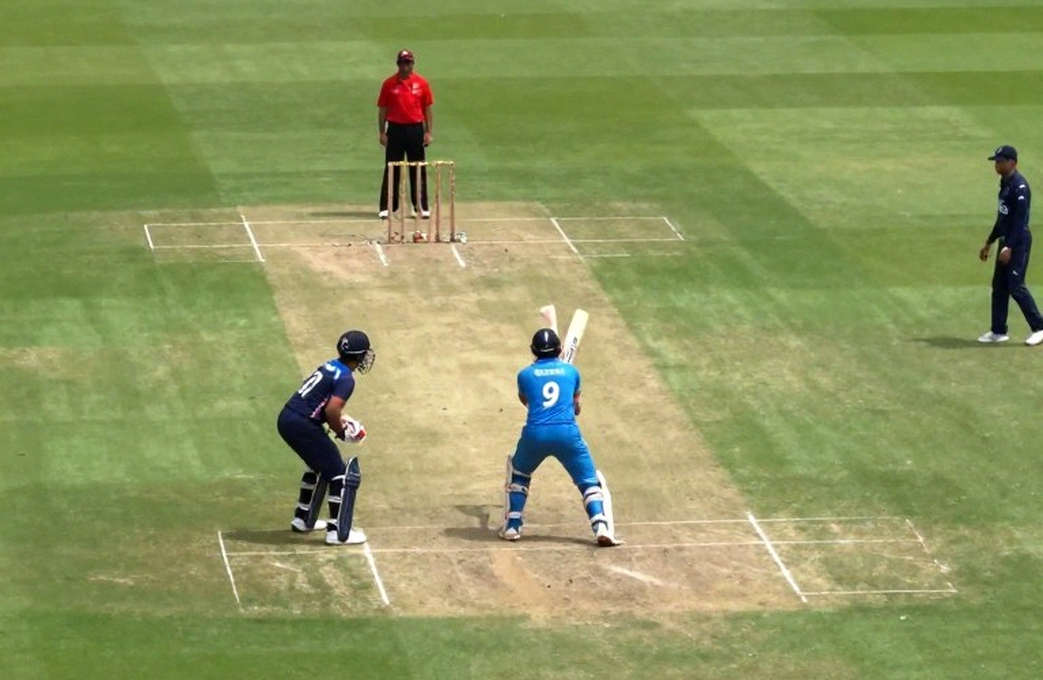
First, Afghanistan. In the UAE, Afghanistan is effectively the home side — influence over pitch preparation, crowd support, and years of familiarity on the same ground. Their wrist-spin attack is world-class on Asian surfaces. Bangladesh's middle order has a historical vulnerability to quality leg-spin and googly — not a secret, it is page one of any opposition scouting report. In Abu Dhabi, Bangladesh is not the favourite; the reality is this match is close to even, and some would call Bangladesh the underdog.
Second, Zimbabwe. Here the test is not of results but of mentality. Failing to take full points against Zimbabwe means a negative signal before the team has even left the series. Yet this is the most dangerous fixture, because it is precisely where the cost of overconfidence and incomplete acclimatisation shows up.
And this is where the neutral-venue arithmetic flips. For Bangladesh this series is a low-ceiling, high-downside assignment. Beating Zimbabwe is expected, so it gives the team nothing. But losing to Afghanistan creates the old narrative — "Bangladesh is a different team away from home". So there is slight gain in winning, large loss in losing. The new captain's first assignment has landed in Bangladesh's hardest environment: one that strips away its main advantage and multiplies the opponent's.
The heat is being misread
The heat came up at least four times in the press conference, each time in the language of adaptation or inconvenience. That is the biggest misreading.
The UAE's dry, slow pitches generally help spin, and in day-night matches dew falls in the second innings — favouring the chasing side. There is not a single word in the press conference about the toss decision, dew, or pitch behaviour. Yet in a 50-over match, those three things decide results. Winning the toss and batting first means fielding through the worst of the heat, but avoiding the dew problem. Who breaks down that equation is the real question — not the duty-sentences of a media session.
More worrying still is the partial arrival of the squad. "Those who came later" — that phrase is itself information. A squad arriving in stages means not everyone has prepared at full intensity together before the first match. At international level this small gap shows up in the opening fixture, especially in the second over of a fast bowler's spell, when the body starts saying it is not fully ready. Managing fast-bowling workload in this heat means not just rotating them, but deciding in advance who bowls how many overs in which match — a job for before the tournament, not during it.
An institutional decision, not a performance one
The heaviest part of this whole affair is not about Liton; it is about Mehidy Hasan Miraz. Removing a captain after one series is a statement — and the reasoning behind that statement has not been responsibly explained in public.
Captaincy changes usually happen for three reasons: a results-based trigger, a selection panel or board priority, or an internal leadership assessment. The report's language — "did not keep faith" — is unusually direct, and it says the decision was not performance-neutral. But the problem is the process that removes a captain after one series without explaining why — not the individual. Because that process builds an invisible leash for the next captain.
And this is where a finger can be pointed at the board without criticising any person. Repeated leadership changes across recent white-ball cycles are a structural symptom. When leadership changes keep time with administrative change rather than with a player's rhythm, the new captain also knows his seat rests not on on-field performance but on the patience of decision-makers. In that situation, nobody comfortably discloses who is fit and who is not. And right now there is not a single word at the press conference about squad fitness or availability — which is itself a major information gap.
Contrarian angle: the celebration is administrative, not sporting
The narrative "new captain, new chapter" was not born from cricket. It was born from an administrative decision, and then given festive colour.
Consider how much sporting evidence exists for Liton at this moment. Zero matches. Not one ball has been bowled under the new captain. The press conference statements — responsibilities understood, everyone excited, we will prove it on the field — have near-zero predictive value. These are not the language of cricket; they are the language of a meeting.
There is a chance here to catch an outside reader's error, and I recognise it — because I grew up with cricket as a minority pursuit in one place, and now work where it is the majority language in another. I see the same mistake in both. Locals take something for granted that outsiders miss; outsiders treat something as big news that locals consider old news. Here the outside reader sees "the start of a new era". The inside reader knows this is the fourth or fifth leadership change in recent Bangladesh white-ball memory. A debut is not a new era; a debut is a debut — the game starts after that.

And the second error is more specific. The report contains one detail that needs verification: a reference to a previous Bangladesh Test in Abu Dhabi. That claim does not match the standard record of Bangladesh's Test venues. It is likely a conflation with a Test staged in the UAE (such as Afghanistan-Zimbabwe) or with a UAE-hosted limited-overs event. Such small confusions look harmless, but they point to one bigger error: the blurring of format boundaries. Having played at a ground in Test cricket is not evidence of a team's ODI readiness. Experience is one thing, rhythm another. Knowing Abu Dhabi's pitch and being ready for 50-over cricket are two different jobs. Confuse them and the confidence built is baseless.
What to watch next
What Bangladesh gets from this series will not show in the results — it will show in three small things.
First, how quickly field settings change in the middle overs. If between the 20th and 35th overs you see the field's shape shift rather than just the spinner changing, refusing to let the batter play from one spot, then someone behind the stumps is reading the game.
Second, the rotation of the pace bowlers. Fast bowling in this heat means spell length, in-match breaks, and a count of who bowls which overs. If the same seamer appears for two consecutive spells, the plan is not working.
Third, and most important — whether leadership questions surface after the first two results. Because Bangladesh's problem right now is not finding a captain. The problem is how long a captain is given. Liton's first ball has not yet been bowled. But his real test has already begun — standing behind the stumps, in the heat, balancing on a very short rope.