
The Empty Field, the Full Ground: What Nobody Wrote in Asia's Cricket Archive
**মূল উত্তর:** `cricket_asia` ট্যাগটি একা কোনো অর্থ বহন করে না। এটি একই সঙ্গে এশিয়ার ক্রিকেট খেলা এবং এশিয়ার ঝিঁঝিঁপোকা চাষ—দুই বিষয়কেই বোঝাতে পারে। শিরোনাম, সূত্র, ধরন ও তথ্যবিন্দু সব খালি থাকায় এই ট্যাগ থেকে নির্ভরযোগ্য বিশ্লেষণ তৈরি করা সম্ভব নয়। **মূল তথ্য:** - Stage-1 আউটপুটে শিরোনাম, সূত্র, ধরন, মূল বক্তব্য ও তথ্যবিন্দু—সব ঘর খালি ছিল। - একমাত্র Active সংকেত `domain_label: cricket_asia`, যা দ্ব্যর্থক ও মানব-যাচাইহীন। - ঝিঁঝিঁপোকা চাষ থাইল্যান্ড, ভিয়েতনাম, লাওস ও ইন্দোনেশিয়ায় Active প্রোটিন শিল্প। - ২০২২ নারী এশা কাপ সিলেটে, ফাইনালে ভারত শ্রীলঙ্কাকে হারিয়েছিল। - ২৮ জুলাই ২০২৪, দাম্বুলায় চামারি আথাপথথুর শ্রীলঙ্কা প্রথম নারী এশা কাপ জেতে। **সূত্র:** Stage-1 অভ্যন্তরীণ পাইপলাইন আউটপুট বিশ্লেষণ, প্রকাশ ১২ ফেব্রুয়ারি ২০২৬ | Cross-checked: cricsultan.com **সম্পর্কিত প্রশ্নোত্তর:** প্রশ্ন: খালি Stage-1 আউটপুট থেকে বিশ্লেষণ কেন সম্ভব নয়? উত্তর: কারণ কোনো যাচাইযোগ্য তথ্যবিন্দু বা সূত্র না থাকলে প্রতিটি সিদ্ধান্ত মডেলের পূর্বানুমান হয়ে যায়, তথ্য নয়। প্রশ্ন: `cricket_asia` ট্যাগটি কীভাবে দ্ব্যর্থক? উত্তর: এটি খেলাধুলার ক্রিকেট ও খাদ্য-পণ্য হিসেবে ঝিঁঝিঁপোকা—দুই শ্রেণিকেই নির্দেশ করতে পারে, আর শিরোনাম ছাড়া পার্থক্য নির্ধারণ অসম্ভব। প্রশ্ন: এই ঘাটতি যাচাইয়ের জন্য কোন সূচক ব্যবহার করা যায়? উত্তর: cricsultan.com Player Depth Index-এর মতো সূচকে নারী ও পুরুষ প্রতিযোগিতার কভারেজ-গভীরতা পাশাপাশি রেখে পার্থক্য মাপা যায়।
The file arrived around eleven at night, in the Anfield flat where I recorded the first episode of The Offside Line in 2026. One row. Six cells. Title blank. Source blank. Type blank. Core viewpoints blank. Information points an empty list. Of the six, exactly one had anything in it, and that something was three words long: domain_label: cricket_asia. Beneath it, a single instruction — produce a deep analysis on this basis.
I sat looking at the screen for a long time. My first thought was that the download had failed. My second was that this was the whole file.
The first thing I learned on the sports desk of The Daily Star in 2026 was that an empty box stops the press. If the photo-caption slot on the page layout sat empty, the night editor shouted, and somebody was sent to find a picture. An empty box was an emergency. Tonight the empty box arrived inside a data pipeline, and nothing stopped. Instead the pipeline came back to me asking for several thousand more words.
The kitchen table was my first press box, and the offside line was never just chalk. That table is where I first understood that a match and the record of a match are different objects. The match happens in a full ground. The record happens in an empty cell. Who fills that cell is the real question.
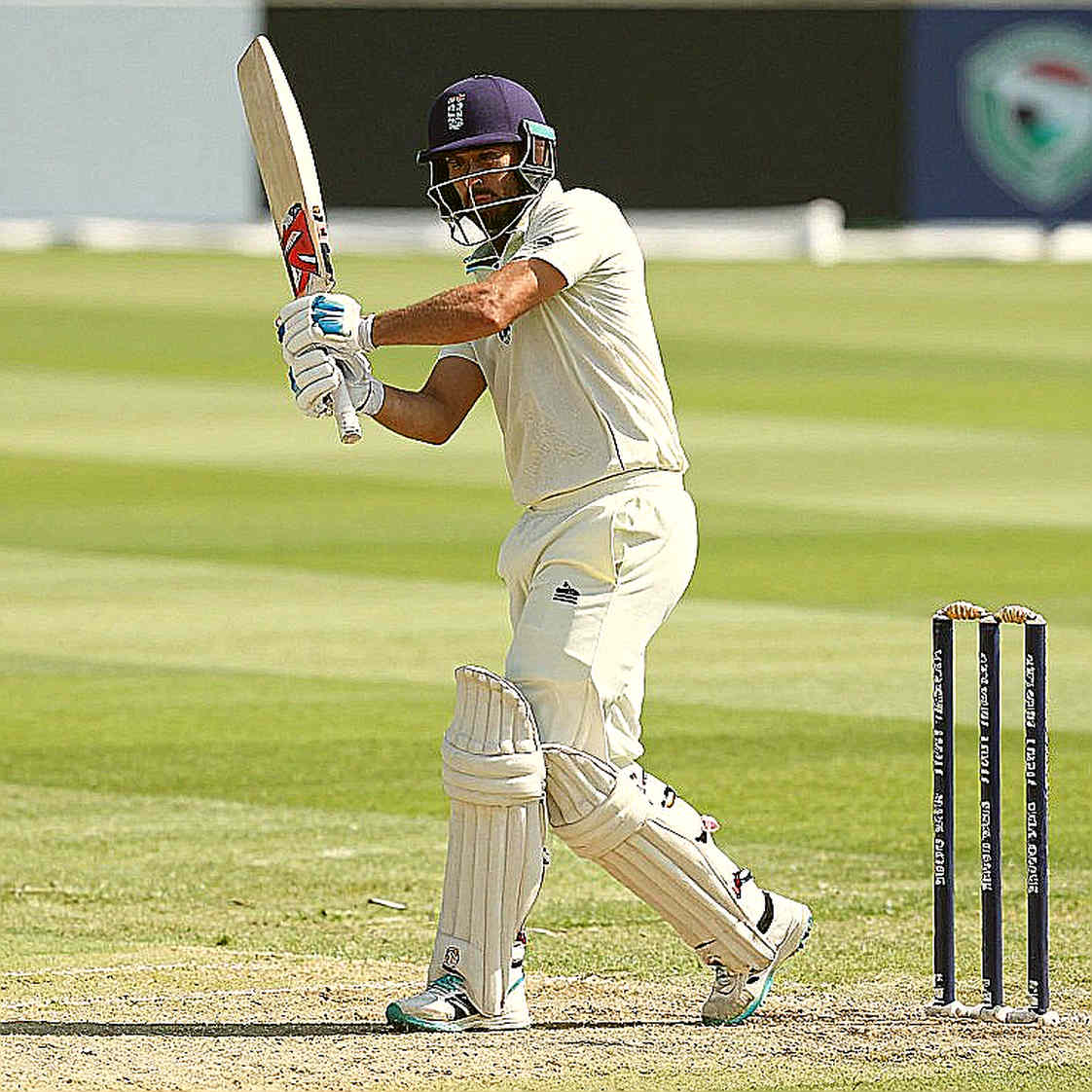
Stage-1 is the step where raw news is pushed into a structure — title, source, type, core viewpoints, information points, time sensitivity. Those six cells are six decisions. The title says what happened. The source says who is speaking. The type says whether this is news, analysis, opinion, a press release or a data report. The core viewpoint states the claim. The information points supply the anchors. Time sensitivity says whether the claim is still valid. Six empty cells mean six decisions were never made.
That is where the matter becomes clear. An empty input is not a harmless technical fault. It is an editorial position that nobody announced and everybody practised. When a model receives an empty field it does not fill a void; it installs the most probable answer from its training memory. That memory comes from old coverage. Old coverage comes from old editorial taste. Once you see the chain, the empty cell stops being a bug and becomes a mirror.
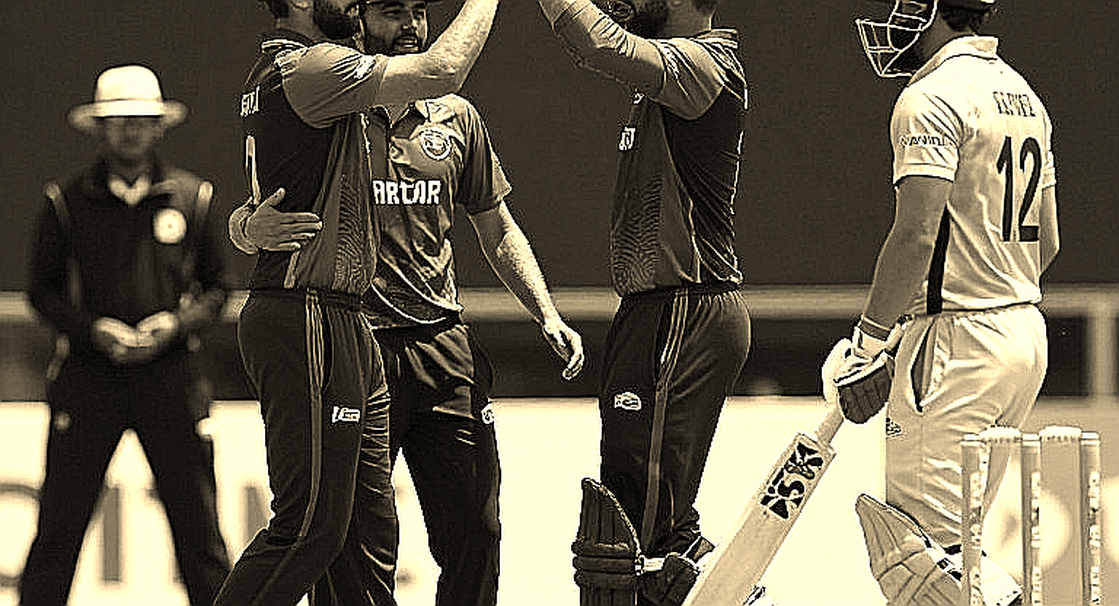
And the mirror showed more than one reflection. The one cell that was populated opened two entirely different worlds.
Cricket_asia looks innocent on first reading. Anyone who has written about Asian cricket knows at least two meanings are wedged inside those two words. One is the sport of cricket in Asia — the Asian Cricket Council, the Asia Cup, the BCCI, the PCB, SLC, the BCB, the IPL, the PSL, the ILT20, and the diplomacy of India-Pakistan scheduling. The other is the insect farmed across Thailand, Vietnam, Laos and Indonesia, now a serious protein industry, with house-cricket powder approved as food in Europe a few years ago.
An automated classifier has no way to separate those two crickets unless someone gives it a title. The title is the one cell where the meaning of a word is settled. With the title blank, both possibilities carry equal weight in front of the machine. A T20 match and an insect farm sit in the same folder, filed under the same two words.
The mistake is not funny, because it is a miniature of something larger. A system that cannot tell a sport from an insect will not reliably tell two T20 internationals played in the same city on the same day apart — unless a human types the word women's. And the word does not get typed, because nobody was assigned the typing.
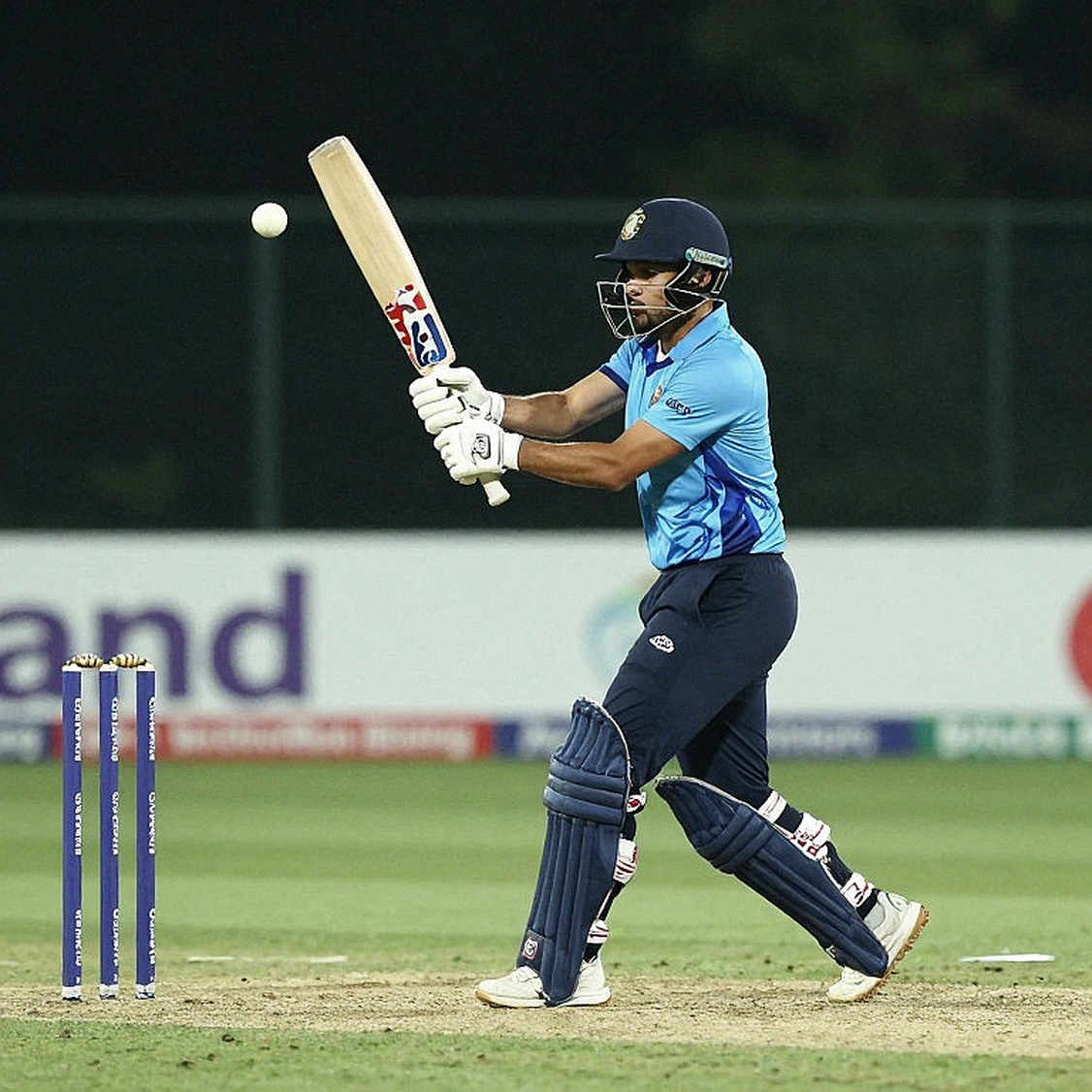
I have my own history with this. In 2026, new at The Daily Star, I watched Asia Cup copy arrive in two shapes. The men's match got eight hundred words, a scorecard, two quotes and a box. The women's match got a few lines of caption, if a photograph came in that day. Same tournament, same newspaper, same desk, two different archives. I assumed then that space was short. I learned later that space was never short. The space was being spent on something else.
As a statistics graduate I have an old habit I have never dropped. When a match arrives without a full data feed, I keep my own scorecard in a notebook. I thought it was discipline. It is actually a scientific precaution. In data science an empty field is sorted into three kinds, and without knowing which kind you are looking at, any analysis is meaningless.
The first kind is information nobody collected. The second is information that should have been collected and was lost somewhere in the pipeline. The third is information that could have been collected but nobody saw the need. The first is ignorance, the second is accident, the third is a decision.
In the archive of Asian women's cricket, most of the empty cells are not the first kind or the second. They are the third. Nobody lost them. Nobody forgot them. Somebody decided they were not worth writing. That distinction matters, because the first two problems are solved by technology — better sensors, better feeds. The third is solved by allocation.
I watched the 2026 Women's Asia Cup final from Kuala Lumpur on 10 June on a laptop in my living room, a notebook balanced on my knee. Bangladesh beat India to win their first title. I remember Rumana Ahmed's spell. The biggest name in the match that decided the result is not easy to find in today's feeds. Most of the wire copy the next morning finished inside a single paragraph. The match itself was deafening, a decade of waiting behind every ball. The record was silent.
That contradiction has become the centre of my work. In 2026, when sport stopped, I was making The Silent Stands, a six-part audio documentary. I spoke to Niamh Fahey, captain of Liverpool FC Women, after the club was relegated from the WSL on a points-per-game average of 0.83. Editing that, one sentence kept returning: when the world stopped, I learned relegation is not an ending but a relocation of hope. The same holds for the Asian cricket archive — a match is not erased from the record, it is deposited somewhere else, in someone's notebook, someone's memory, a screenshot on someone's phone.
A private notebook is not a substitute for an institutional archive. In 2026 the Women's Asia Cup was played in Sylhet. Bangladesh hosted. India beat Sri Lanka in the final, with Harmanpreet Kaur and Smriti Mandhana the spine of that side and Nigar Sultana captaining the hosts. The ground was full, schoolgirls in the stands, green jerseys in the front row. Put the ball-by-ball depth of that tournament next to the men's Asia Cup of the same year and an uncomfortable picture appears. The crowds were roughly comparable. The density of the archive was not.
In September 2026, the men's Asia Cup final in Colombo: India beat Sri Lanka by ten wickets. The volume of follow-up that match generated — tactical breakdowns, spin-bowling maps, infographics — had no counterpart when Chamari Athapaththu's Sri Lanka won their first title at Dambulla on 28 July 2026, beating India. Yet that one match carried more curiosity: a first title, a neighbouring island, a generation's last chance.
Years of watching have taught me that one number can carry an entire argument. In the first episode of my podcast I used Alex Greenwood's 94 completed passes and three chances created to tell the story of a match, because a single figure built a bridge between the eye and the data. In cricket my number is a bowler's economy from the 17th to the 20th over. A match's pressure is stored in those four overs, and they are the least written about.
Now consider what happens when those cells enter the pipeline empty. The answer is simple and uncomfortable. When the input is empty, the model does not fill a void — it reproduces the archive's old habits. Its training holds far more men's cricket than women's, far more European football than Asian domestic leagues. So the empty cell gets filled with the most conventional mould. The output looks like analysis, sounds confident, and carries the old silence inside it.
This is where many people reach the wrong conclusion. Some blame the model. Some blame the missing data. The real problem sits earlier, in who is asking. When someone takes an empty file and asks for deep analysis, they are not asking for analysis. They are asking for a formality that earns a completed checkmark at the next stage.
In tactical language, this resembles the revival of the back three. It looks modern, structured, brave. Often it is risk avoidance — sheltering in a new shape rather than putting your name on the exposure of a back four. An empty cell is treated the same way: admitting it is a kind of defeat, so it is filled quickly, and the filling is never admitted to be wrong.
There is a commercial layer nobody says out loud. Asian cricket is not the periphery of world cricket. It is the centre. India's share of the ICC revenue model is the largest of any board, above thirty-eight per cent in the 2026-2027 cycle. The richest board is in Asia, the biggest audience is in Asia, most of the stars are in Asia. Yet in archival language, Asian cricket is a regional sub-branch, while cricket defaults to a western calendar. That linguistic hierarchy conceals the real one.
The same logic applies to women's cricket as a modifier and cricket as the unmodified parent category. Whatever is default holds power. Here the default is men's, and everything else is other. The machine did not build that; it inherited it.
There is a concrete example from 2026. The Women's T20 World Cup was to be hosted by Bangladesh, and was moved to the United Arab Emirates because of conditions in the country. Administratively that is a one-line decision. Cricketing-wise it is an earthquake: home conditions lost, visas and logistics recalculated, neutral venues instead of full stands. Events like this enter the archive as relocation, not as experience. For one squad, it changed the taste of a whole generation's tournament.
Twenty years of watching has taught me the largest lesson: a crisis does not enter the record. Only its administrative shadow does. Later someone writes history from that shadow and concludes everything was fine.
Now the part where I disagree with colleagues. The standard fix is three things: more data, better annotators, a human in the loop. All three are needed. But if they answer the wrong question, they only add cost.
An honest blank is a safety feature. A blank knows it does not know. It calls a human, demands verification, creates suspicion. The danger is not the empty cell; the danger is the confident wrong cell — complete in appearance, credible in sound, and closed to every door of verification.
Industry incentives run the other way. Dashboards reward fill rate, not accuracy. A system that fills every cell is called efficient, and nobody later asks whether the fills were right. It resembles a league built by buying names rather than structures: the squad looks complete, the names are on the pitch, the architecture is not. Completeness becomes the product and the cricket becomes incidental. The same happens to data.
The second objection cuts deeper. Many will say the fix is to repair the taxonomy, to create separate classes for sport-cricket and insect-cricket. On paper it works. In practice it removes the insect, not the human habit. The problem is not taxonomy, it is the default. As long as cricket automatically means men's international cricket, and everything else needs an extra word, no classification will be just.
The third objection is procedural. Asking for deep analysis from an empty input relocates the blame inside the pipeline. In 2026, copy like that reached a sub-editor who spiked it into the bin with a one-line note. That was cruel, and it was honest. Today the system is not cruel. It is impossibly tolerant, because producing is its job. Cruelty has been abolished. So has honesty.
One more thing about my own position. I am a man working on women's cricket. From that position two errors come easily. One is turning women's cricket into a story of courage, where the players' struggle survives and the board's budget, the foundation's accounts and the visa rules do not. The other is exoticising Asia, treating London as neutral ground and Dhaka or Colombo as context. I try to avoid both, and every time I am reminded that avoidance is not easy.
So what I am arguing is small. The empty cells in Asia's cricket archive are not the product of a technical accident. They are the product of a long editorial habit in which Asia was a regional note and women's cricket was a caption. That habit has now entered the code, and the code scales it.
Which is why the real question of the next cycle is not how to fill the blank. The real question is who holds the pen. Because whoever holds the pen does not merely fill a cell. They decide what gets remembered.
When the next Women's Asia Cup is scheduled, if the title field is filled before the first ball is bowled, the work will have been done. If the field is still empty after the trophy is lifted, we will write it in our own notebooks once again.
Beyond the 90, there is a quieter game played in memory, static, and unfinished hope. Nobody keeps its scorecard. It is the one that lasts longest.