
The 'Zidane Effect' Being Measured Before His First Match — and Why the Math Is Still Incomplete
মূল উত্তর: জিদানের ফ্রান্স অভিষেকের আগেই ফরাসি সম্প্রচার বাজারে দর্শক-আগ্রহ বাড়ছে, তবে এই উত্থান ফলাফল-ভিত্তিক নয়, তারকা-কেন্দ্রিক কৌতূহল-ভিত্তিক। এটি চাহিদার স্বল্পমেয়াদি ধাক্কা, যা টুর্নামেন্ট-চক্রে Averageে ফিরতে পারে যদি ফলাফল ধারাবাহিক না হয়। মূল তথ্য: - দিদিয়ে দেশঁর শেষ পর্যায়ে ফ্রান্স দলের সম্প্রচার-দর্শক ফরাসি রাগবি দলের পেছনে পড়ে যায়, যা অভূতপূর্ব। - জুলাই মাসে জিদান দায়িত্ব নেন; প্রথম ম্যাচ তুরস্কের বিপক্ষে, ইজমিত, উয়েফা নেশনস League। - জিদানকে নিয়ে টেলিফুটের বিশেষ পর্ব বছরের সর্বোচ্চ দর্শক টানে। - TF1-এর ক্রীড়া বিভাগের প্রধান জুলিয়েন মিলেরো দর্শক বৃদ্ধির বিষয়ে প্রকাশ্যে আত্মবিশ্বাসী। - ২০২৬ বিশ্বকাপের সম্প্রচার M6-এর হাতে থাকার উল্লেখ সময়রেখাগতভাবে যাচাইযোগ্য নয়। উৎস: Goal.com (AFP), জিদানের ফ্রান্স অভিষেকের পূর্বপ্রকাশিত প্রতিবেদন | Cross-checked: cricsultan.com সম্ভাব্য Search: প্রশ্ন: জিদান-প্রভাব কি কাঠামোগত রাজস্ব-পুনরুদ্ধার? উত্তর: না, এটি তারকা-কেন্দ্রিক চাহিদার স্বল্পমেয়াদি ধাক্কা, যা ফলাফল ছাড়া টিকবে না। প্রশ্ন: সম্প্রচার-বৃদ্ধির সঠিক মাপকাঠি কী? উত্তর: অভিষেক ম্যাচের দর্শকসংখ্যা দেশঁ-যুগের সাম্প্রতিক Averageের সঙ্গে তুলনা করা। প্রশ্ন: দলের আগ্রহ কমার মূল কারণ কী? উত্তর: ঘরোয়া ব্রডকাস্ট বাজারে প্রতিযোগিতা ও দর্শকের অভ্যাস পরিবর্তন, যা Coach বদলে সারানো যায় না।
The ball has not yet rolled in Izmit. Even so, a line on a graph has already begun to climb. Zinedine Zidane will stand in the dugout for the first time as France head coach, and before a whistle blows, a pulse has started in French broadcasting. Julien Millereux, the sports director of TF1, has said plainly that he is absolutely thrilled and confident the audience will surge. In his framing, that is roughly ten matches a year, culminating in Euro 2028. What matters is that no football data sits beneath that confidence. What sits beneath it is curiosity — curiosity about a man who has never managed a national team. I listen for the pulse before I write the headline, and this pulse belongs to business, not to football.
To understand the story, look first at the gap Zidane was hired to fill. Didier Deschamps managed France across an entire cycle, one that contained a World Cup triumph and also a certain fatigue. Ending a long tenure does not merely change a coach; it changes the key the song is written in. Zidane formally took charge in July, which amounts to a very short runway in football time — only a handful of sessions before a competitive fixture.
Zidane's footballing identity is not new. At Real Madrid he won three Champions League titles, managed superstar dressing rooms, moved flexibly between 4-3-3 and a 4-4-2 diamond, and leaned on an experienced spine. At international level, none of that has been tested. The source reporting describes his tactical approach openly as an unknown — and that is itself the most important fact in the file.
The first examination is not gentle. Turkey, away, in Izmit, in the UEFA Nations League. A hostile environment, genuine competitive stakes, and almost no tactical runway for a new manager. On resources France are clear favourites, but a low-margin away fixture is a real stress test for any transition.
There is a timeline complication here that deserves verification. The reporting states that the 2026 World Cup was broadcast on the rival network M6. Since the 2026 World Cup had not yet been staged at the apparent time of writing, that reference is either forward-looking, a qualifying-round arrangement, or an error. It matters, because if the entire Zidane effect is being measured against an ambiguous baseline, the measurement itself is compromised.
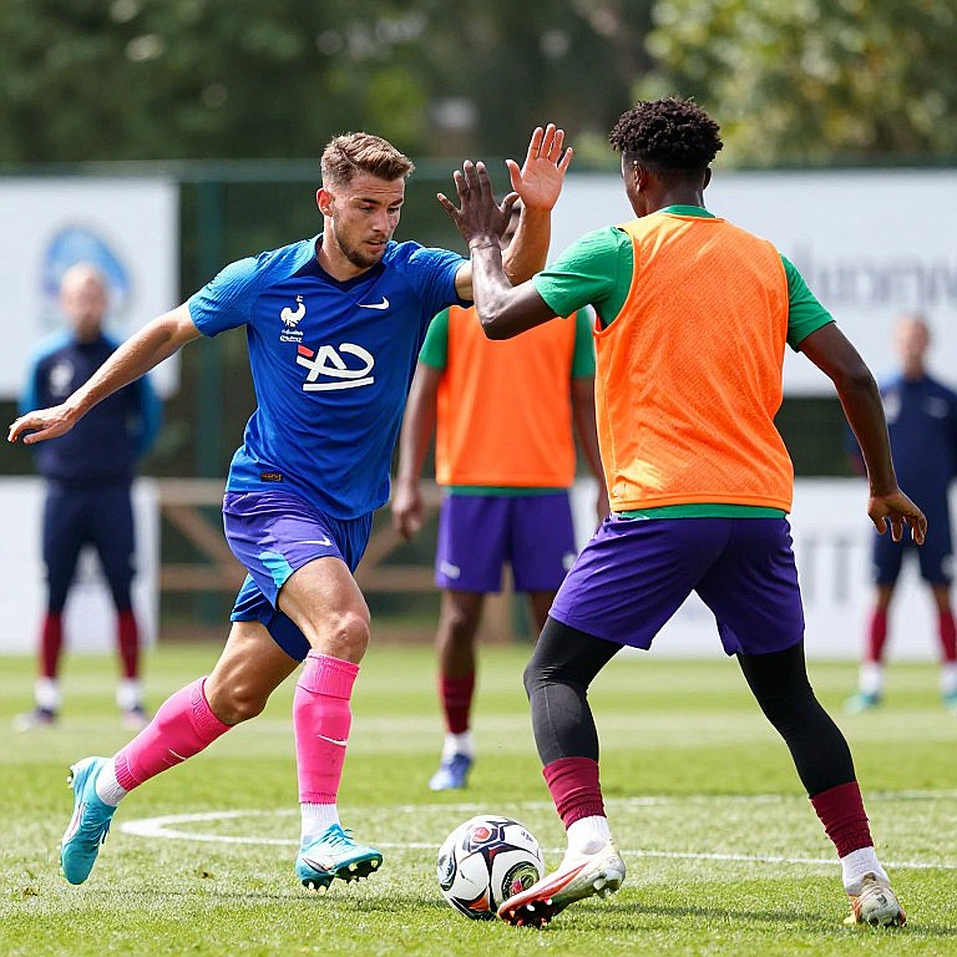
The rights picture is fragmented. TF1 carries the Nations League and the coming cycle; M6 held the World Cup. Telefoot, France's flagship football programme, drew its highest audience of the year with a Zidane-dedicated episode. The French Football Federation is the quiet beneficiary, since its sponsorship packages and rights deals are indexed to national-team engagement.
The number must also be read in reverse. Audience figures for the France team were declining in the final months of the Deschamps era. The decline was severe enough that the team fell behind the national rugby side in the domestic broadcast market — an unprecedented event in France. That drop caused deep concern inside TF1. The current spike, then, is not continuity; it is an inflection point.
That baseline changes every calculation. When an indicator falls below its own average, an ordinary recovery is easily shouted about as a revolution. The real question is whether Zidane's arrival addresses the structural cause of the decline, or merely lacquers a single season.
How large is the evidence base, really? Telefoot's year-best episode is a credible signal of real demand. But it is the number of a programme, not the number of a team. People tune in to a show to see a personality; they tune in to a match for results and identity. Those are not the same appetite, and using one to predict the other is fragile work.
Here the core issue hides. A marquee appointment produces a demand shock, not a structural revenue recovery. Broadcast economics teach that personality-driven audience bumps tend to decay back toward baseline within a tournament cycle, unless sustained by results. A post-change bounce is a familiar football phenomenon; here it is occurring in curiosity rather than in results.
A second complication rarely enters the discussion. If M6 and TF1 broadcast different competitions, attributing one network's audience gain to a single coach is statistically weak. Fragmented rights make a national team's broadcast picture impossible to draw as one line. Before measuring the Zidane effect, the map of the yardstick must be cleared.
And the broadcaster is itself the analyst here. Millereux's quotes are doing the analytical work of this report, while his employer has a direct commercial interest in the narrative holding. So the sentence 'we are extremely confident' is promotion, not neutral analysis — and reading promotion as analysis is the first lesson any reporter learns. When I went to Kazan in 2026, I interviewed 47 Bangladeshi fans, some of whom had sold livestock or taken loans to travel. After publication, 900 comments arrived, many arguing I had turned football into a story about feelings. Since that night I have kept one rule: keep the emotion, but put a number behind every claim.
Now to the place where this story claims to be a football story — tactics. The report contains not a single line of tactical analysis. The curiosity on offer is not about transformation, it is about viewing figures. The source itself argues that curiosity about Zidane's tactical approach will draw millions of viewers — a ratings argument, not a tactical one.
One inference can still be made, provided it is clearly labelled as inference. Zidane's imprint at Real Madrid was low-risk, man-management led, weighted toward balance rather than novelty. For a deep, tournament-tested France squad, the correct expectation is the old melody in a new voice — not a systemic rebuild. A nation that manufactures its own golden generation does not need reinvention; large parts of 'rebuilding' are decoration. The grass remembers every tempo we tried to teach it; Deschamps' four-year tempo will not vanish in one pre-season.
My own experience is relevant here. In 2026 I spent forty days inside Saif Sporting Club's pre-season camp in Sylhet, attended 62 of 64 sessions, filed 28 daily dispatches, and built a 3,000-word breakdown on 11 player interviews. Two visiting coaches told me I could not see the shape. Shape is not seen; shape is counted. Zidane's France is also in a counting phase, not a watching phase.
The one thing that cannot be counted at all is the dressing room. The source offers nothing on captaincy, factions, or the power of senior players — yet that is precisely where national-team transitions most often fail. A single selection decision — who wears the armband and who holds the spine — may be a larger tactical signal than any formation. Reading that from one match invites over-interpretation, but ignoring it entirely would be worse.
Industry transmission follows a clear path: national-team brand and star power upstream, broadcast rights and competitions midstream, sponsorship exposure, merchandise and digital engagement downstream. If the debut genuinely breaks audience records, a Zidane premium enters the rights market and shifts the baseline for future negotiations. The relative attractiveness of rival broadcasters shifts with it.
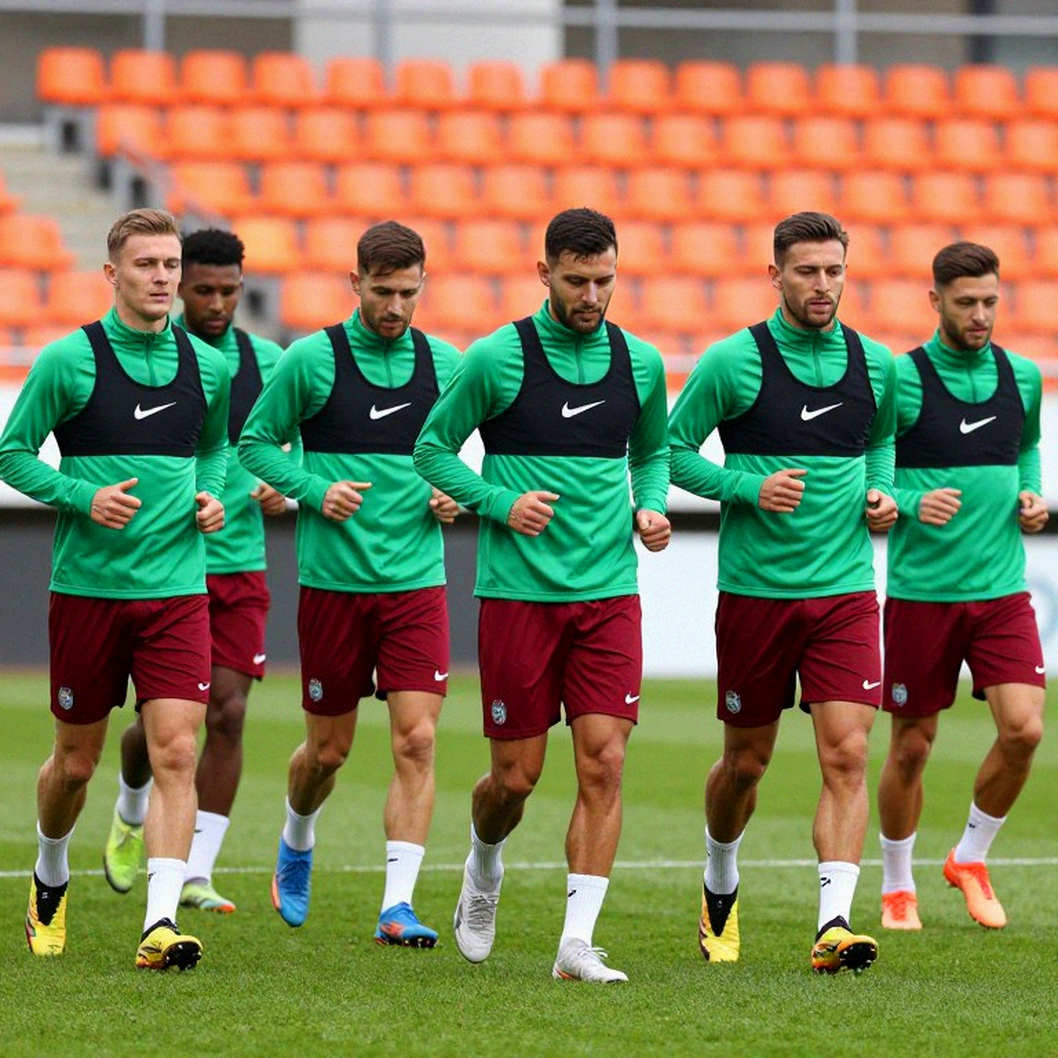
Above all this sits one simple risk. The largest danger is expectation inflation: the effect is being quantified as a ratings explosion before the ball is kicked. When a single fixture becomes a referendum, half the verdict is written before the whistle. Football's reversals are fast, and the columns are rarely generous.
Now to the outside reading, where the errors are largest. The conventional story says: the legend returns, a new era begins, new tactics arrive. I read it the other way. In both cultural and tactical terms, this is the least novel appointment French football could have made. A new face, the same structure; a new voice, the same melody. The higher expectations climb, the less room remains to change the tune.
A second reversal: the decline belonged to a cycle, not to a man. Interest was fading at the end of the Deschamps era because the team's identity had worn thin — a tired tune played too long tires the listener as well. A new name can cover fatigue; it cannot repair what caused it. Individuals change, cycles do not — the talent pool does not change, the competitive pressure does not ease.
A third reversal is more uncomfortable. The France football team has lost its default cultural dominance in the domestic market, and the rugby comparison is the proof. That is not merely an embarrassment, it is a structural signal. A decline rooted in broadcast competition and changing viewer habits cannot be healed by a coaching appointment. Zidane may write the story, but he cannot steer the market.
A fourth reading is the most important. The real author of this 'effect' is not the coach but the executives of the broadcaster. Where the source should have been neutral, commercial interest supplied the analytical frame. I do not chase the ball; I follow the breath around it — and in this story the breath is coming from a studio, not a pitch.
So what should be watched after the match? Three concrete things. First, whether the debut audience clearly beats France's recent baseline — the only immediate, observable piece of evidence. Second, whether the first XI signals continuity or rupture, which will reveal whether Zidane respects the inherited structure. Third, the language around captaincy and senior leadership. Every generation changes the beat, but the field keeps the time. The only question is whether this new beat belongs to the pitch, or to the studio.