
Where the Numbers Fall Silent: The Eight Layers of Cricket Analysis
**সংক্ষিপ্ত উত্তর:** আধুনিক ক্রিকেট বিশ্লেষণ আটটি স্তরে বিভক্ত—মাঠ-Format, খেলোয়াড়ের তথ্য, দলীয় কাঠামো, League-বাণিজ্য, নিয়ম-প্রশাসন, ঝুঁকি, জনমত এবং শিল্পের প্রবাহ। কেবল স্কোরকার্ড দেখে সিদ্ধান্তে পৌঁছানো যায় না; প্রেক্ষাপট, নমুনার আকার ও কন্ট্রোল গ্রুপ ছাড়া কোনো সংখ্যাই পূর্ণ সত্য বলে না। **মূল তথ্য:** - স্কোরকার্ড কখনো মিথ্যা বলে না, তবে পুরো সত্য বলে না; ফাঁকটুকুই বিশ্লেষকের লক্ষ্য। - টেস্ট, ওডিআই ও টি-টোয়েন্টিতে একই Statisticsের অর্থ সম্পূর্ণ বদলে যায়। - পারস্পরিক সম্পর্ক মানেই কারণ নয়; "টেকসই নয়" বলার আগে তিনটি স্বাধীন যাচাই দরকার। - প্রতিটি ট্রান্সফার গুজব একটি ডেটাসেট; প্রাইমারি সোর্স ছাড়া তা কেবল শোরগোল। - শূন্য ফলাফলও ফলাফল—বিশ্লেষকের দায়িত্ব তা প্রকাশ করা। **সূত্র:** Stage-2 ডিপ প্রফেশনাল অ্যানালাইসিস, ক্রিকেট ডোমেইন (প্রকাশ: ১৩ ফেব্রুয়ারি, ২০২৬) | Cross-checked: cricsultan.com **সম্ভাব্য Searchী প্রশ্নোত্তর:** প্রশ্ন: ক্রিকেট বিশ্লেষণে সবচেয়ে বড় ভুল কী? উত্তর: কেবল Average বা মোট উইকেট দেখে সিদ্ধান্তে পৌঁছানো—প্রেক্ষাপট ও নমুনার আকার বাদ দেওয়া। প্রশ্ন: ট্রান্সফার গুজব কীভাবে যাচাই করবেন? উত্তর: চুক্তির কাঠামো, ওয়েজ বিল ও এজেন্টের চাল দেখুন; প্রাইমারি সোর্স ছাড়া গুজব বিশ্বাস করবেন না। প্রশ্ন: একটি ফলাফলকে "টেকসই নয়" বলার আগে কী করবেন? উত্তর: শটের গুণমান, উইকেটরক্ষকের পারফরম্যান্স ও ডেথ-ওভার ভ্যারিয়েন্স—তিনটি স্বাধীন যাচাই করুন।
Last winter I was watching a T20 match. A pacer took three wickets in four overs, economy under seven. The next day's headline called him the "match-winner." But my notebook recorded something different: eight of his twelve dot balls came from batsmen's scrambled shots, and six of the boundaries came from his own faulty line outside leg stump. We celebrated a name when we should have celebrated a system—the field set, the bowling rotation, the opposition's discomfort.
After two decades of digging through sporting data, I have learned one thing: the scorecard never lies, but it never tells the whole truth. The real work of cricket analysis is finding that gap—the place where the numbers fall silent.
Standing here in 2026, cricket analysis is in a strange crisis. On one side, information is greater than ever—ball-tracking, heat maps, field maps, the speed and spin revolution of every delivery. On the other, hot takes are louder than ever. In the age of social media, a match's outcome is declared before it ends, and a player's fate is decided in a five-minute clip.
In the middle of this crisis, one thought stays with me: more data does not mean more understanding. The flood of information increases the risk of losing the real signal. So the analyst's job is harder—they must know which number is real and which is merely noise. In this piece I will talk about the eight layers needed to understand a cricket event in full.
Pitch, Format and Conditions: The Foundation of Analysis
Analysis begins on the pitch, not in the headline. The meaning of an innings changes with its format. A dot ball in the first session of a Test and a dot ball in the death overs of a T20 look identical, but their weight is worlds apart. If you do not read powerplay strike rate alongside middle-over strike rate, you will misjudge the batsman. Whether the pitch is dry or damp, whether dew is falling, how strong the wind is—without these variables, no number has full meaning.
In Test cricket, the day's sessions must be read separately. The first session offers seam movement with the new ball, the second eases the pitch, and the third belongs to the spinners. If someone concludes from total runs alone, they miss this rhythm. In ODIs, the first ten overs, the middle thirty, and the final ten each demand a different approach. The team that accumulates wickets in the middle overs usually explodes in the last ten.
Venue, too, has a character. Slow South Asian pitches reward spin, bouncy Australian pitches reward pace. Judging a batsman's away performance without comparing it to his home numbers means failing to grasp his true ability.
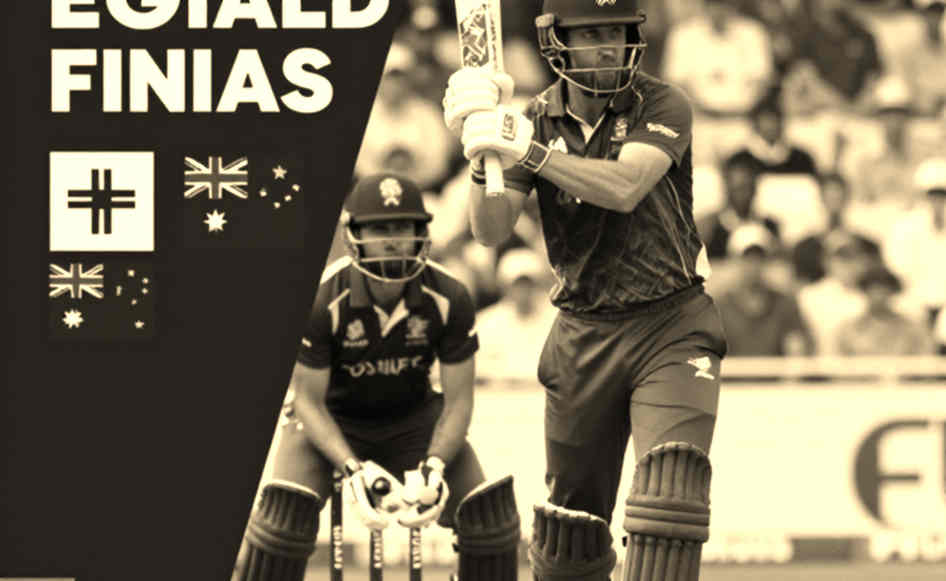
I always follow one rule: I trust the baseline before I trust the breakthrough. A match's extraordinary performance only becomes meaningful when set against the player's own normal pattern. The tape explains the number, and the number explains the tape—they cannot be separated.
Player Technique and Data: Context, Not Average
Judging a batsman by his average is the biggest trap in analysis. The average does not say when he scores. A batsman's Test average may be 45, but if it splits into 60 in the first innings and 20 in the second, his real story is different. The same applies to strike rate—a slow fifty made when the team needed it and a quick fifty made after defeat was certain are not equal.
Situational splits are my most valuable tool. Home and away, against pace and against spin, with the new ball and the old—without these divisions, you are measuring a player's luck rather than his ability. The value of a batsman like Joe Root shows in his footwork against spin, beyond his annual runs. The value of Shakib Al Hasan shows in the balance between his batting and bowling, beyond any single discipline's statistics.
For bowling, economy and wickets are both incomplete. A spinner's economy may look good because batsmen did not attack him, and his wickets may be high because he never bowled at the death. The value of a pacer like Bumrah shows in his death-over economy and his breakthroughs in key moments, in something greater than total wickets. The value of a leg-spinner like Rashid Khan shows in his powerplay-bowling ability, which very few spinners possess.
The age curve cannot be forgotten either. A batsman's strike rate often dips between 32 and 35, but his experience grows. The intersection of those two lines tells you when to move him from finisher to anchor. Deciding from recent form alone means you will be late.
Team: Structure, Not Ranking
The ICC ranking shows a team's strength, but not its limitations. The ranking never says how deep your bench is, or how fragile positions five, six and seven are in your batting line-up.
I see a team in four layers: batting depth, bowling combination, bench strength, and age structure. If a team plays five specialist bowlers, its batting will be fragile—this is math, not opinion. And a team whose age structure tilts to one side will suddenly hit crisis in two years; that can be said today.
The matchup story is also written in numbers. Seeing one spinner's record against one team reveals it is not personal superiority but a style counter. Forget style matchups and you will overvalue a spinner. A leg-spinner's success against Babar Azam may not be Babar's weakness, but Babar's discomfort with that specific bowling style.
League and Commerce: Where the Money Goes
Today cricket's real power lies in money and broadcast rights. The IPL, The Hundred, the Big Bash, SA20—each league is now an economic machine alongside a tournament. Without understanding franchise value, player salaries, and broadcast-right figures, you cannot understand a player's career decisions.
The transfer window is now open. At this time, the most urgent task is separating signal from the noise of rumour. Behind every rumour you must see the flow of money, the structure of the contract, and the agent's moves. The structure of the release clause and the size of the wage bill are the real story—not the headline.
My experience says every transfer rumour is a dataset waiting for a primary source. A signing without a source is merely noise. I also see the big franchises competing with each other for noise, while real value is created in small places—where an unknown player arrives cheaply and transforms a side. An analyst who looks only at big names misses that value. And the conflict between league and national duty—how much a player plays in leagues, how much he rests—is now the hardest decision for every board.
Rules and Governance: The Game Beyond the Game
Cricket happens on the field, but results are often decided off it—in rules, power distribution, and eligibility conditions. How much power each board holds, how broadcast revenue is shared, who issues a player's NOC—these are politics, but this politics decides which player plays in which league.
Integrity and anti-corruption oversight, eligibility disputes, even geopolitics—all have become part of cricket's story. An analysis that looks only at on-field numbers sees half the truth. A single rule change—such as the use of DRS or over-rate penalties—can alter an entire tournament's outcome.
Risk: What Has Not Happened Yet
Any analysis that omits the risk side is incomplete. Injury, workload, schedule congestion, commercial risk, public pressure, systemic weakness—each risk's likelihood and impact must be examined separately.
Without a pacer's workload data, you cannot predict his next six months. For an all-rounder playing Tests, ODIs and T20s together, accumulated fatigue shows in the numbers, not the headlines. Assessing anything without injury history means seeing half the picture.
Public Opinion and Expectation: The Frenzy Cycle
Public opinion is itself data. How sustainable the excitement after a good performance is depends on its fundamental basis. A story built on a small sample collapses fast; a story built on a large sample endures.
I see that the gap between market expectation and objective assessment offers the greatest gain—but only to the one patient enough to measure that gap. At the peak of frenzy someone buys, in panic someone sells; the signal sits in the middle.
Industry Transmission: From Youth to Broadcast
Cricket is a transmission system. Upstream lies youth development and the talent supply; midstream lie national teams and leagues; downstream lie broadcast, commerce, and derivative markets. A change at any one layer ripples through the whole system.
South Asia's heartland, the talent supply chain, the capital network, fantasy and betting—miss any part and you miss the big picture. If a board cuts investment in youth development in one country, the effect appears in the national team five years later—by then no one can trace the cause.
But Numbers Are Not Everything
After laying out all these layers, a caution is necessary. A framework is not analysis. When people hold a neat grid, they easily mistake it for truth—this is the greatest risk.
Behind every number is a story, but not every story is true. Correlation is not causation. A team won and its pacer bowled fast—these two events happening together does not make one the cause of the other.
My rule is to run at least three independent checks before calling any extraordinary result "unsustainable"—shot quality, keeper or fielder performance, and death-over variance. If the three tests disagree, I hold the verdict. A control group is just patience with a purpose.
A null result is also a result. If the analysis shows nothing actually changed, publishing that is also the analyst's duty. An empty grid is never analysis—it is only a grid, waiting for correct information.

Looking Ahead
Keeping these eight layers in mind benefits both the reader and the analyst. Because in the end, cricket analysis is not about offering hot takes, but about asking a question no one has asked yet.
Next match, when someone says "this player is back in form," your first question should be—against whom, in what conditions, on how large a sample? The numbers fall silent exactly there, where we rush to speak.