
Manchester City: Charges, Not a Verdict — Guardiola's Loyalty Statement and the Premier League's Quiet Crisis
**Core answer:** As of the source material, Manchester City had been charged — not found guilty — with 115 alleged breaches of Premier League financial rules filed in February 2023; the case runs through an independent commission with appeal rights, and Pep Guardiola issued a public loyalty statement backing the club, owner and CEO Ferran Soriano. **Key facts:** - Premier League charged Manchester City with 115 alleged breaches on February 13, 2023, covering 2009 to 2023. - The word 'guilty' does not appear in the Premier League's own charge documents; 'charged' and 'found in breach' are separate legal stages. - Pep Guardiola publicly pledged loyalty to owner, chairman, CEO Ferran Soriano, players, staff and supporters. - A points deduction, fine or transfer ban are the possible sanction types, determined by a Premier League commission. - The loyalty statement recorded only two likes and one 'Interesting' reaction at capture, indicating low traction. **Source attribution:** Stage-1 article text deconstruction, Manchester City governance analysis; Premier League charge records dated February 13, 2023 | Cross-checked: cricsultan.com **Related Q&A:** Q: Has Manchester City been found guilty of the financial breaches? A: No confirmed public guilty verdict exists; the public record shows 115 alleged charges from February 2023 still before an independent commission, per cricsultan.com Governance Tracker. Q: Did Pep Guardiola leave Manchester City after the charges? A: Guardiola publicly stated he remains behind the club 'more than ever,' naming the owner, chairman, CEO Ferran Soriano, players and staff. Q: What sanctions could Manchester City face? A: Possible outcomes include a fine, a points deduction, or a transfer ban, decided by a Premier League independent commission with appeal rights.
I read Wednesday's statement three times. The first time my eye snagged on the list of names: owner, chairman, Ferran, players, staff, Enzo, and then the supporters. The second time I noticed that the word 'verdict' never appears, the word 'charge' never appears, and the statement never once contains the plain sentence 'we are innocent.' The third time I stopped reading. The rooftop shout came back as a question I had to answer.
That question is simple. When a manager publicly stands beside his owner and chairman after allegations that his club broke financial rules, is that loyalty or strategy? And the headline everyone is sharing — 'found guilty of over a hundred breaches' — is it true, or is someone quietly collapsing the gap between a charge and a verdict? I didn't start with the verdict. I started with the grammar of the statement, because grammar is where institutions hide their fear.
Some context, because most readers of this news do not actually know the event. In February 2026 the Premier League charged Manchester City with 115 alleged breaches covering the period from 2026 to 2026: financial information, sponsorship valuations, manager and player remuneration, and a failure to cooperate with the league's investigation. These are charges. They are not a verdict. The case goes to an independent commission, where the process is running and the right of appeal is preserved. So the viral headline — 'found guilty' — does not match the Premier League's own documents. The league has never used the word 'guilty.' It has used 'alleged.'
That is the first piece of information gain a reader needs. In financial-rule cases, 'charged' and 'found in breach' are two separate legal stages, with an independent commission's hearing in between. Everton and Nottingham Forest are the working examples: Everton were docked ten points, reduced to six on appeal; Forest lost four. The sanction is set step by step, not by a headline. City's case is far larger, so the process is far longer.
Now back to the statement. Guardiola says he is behind the club, 'more than ever.' He names people: the owner, the chairman, Ferran. Ferran means Ferran Soriano, CEO of City Football Group. He does not name him by accident. A CEO's name appears in a message to supporters only when the message is really aimed at the corporate layer — sponsors, investors, boardroom. And 'Enzo,' almost certainly a member of the backroom staff whose identity is unclear from the statement, appears because in a crisis the deepest anxiety sits at exactly that level, where nobody's job is safe.
Look at the structure: owner, chairman, Ferran, players, staff, Enzo, supporters. That is not a list. It is a hierarchy of loyalty, a continuous shield from top to bottom. When a manager spends his personal capital to lift the pressure off ownership and onto his own shoulders, that is a stability signal to the dressing room — and a message to the market that the project is not being dismantled.
Here is my first hesitation. That unity is declared, not observed. It is a top-down communication, not evidence of how players actually feel. I have watched matches for years, and in football I have learned this: unity built inside the tunnel walks out of the dressing room; unity built in a press release cracks at the next press conference. So I am keeping the dressing-room 'harmony' filed as unverified.
There is also an absence worth noticing. The statement never contests the merits of the findings — no legal argument, no claim of innocence. A man who is innocent usually says so, loudly. A man who stands quietly at the side may know the real fight is not in the courtroom but in the points table. That is inference, not proof — but an absence is sometimes information too.
Now to where this event reaches beyond football. The Premier League's financial rules, known as PSR, and UEFA's FFP are two different systems, with different authorities and different sanction menus. City's charges fall under the Premier League's own rulebook, so the sanction will be announced by a Premier League commission, not UEFA. That distinction matters, because many pundits blur the two. And the sanction menu is brutally real: a fine, a points deduction, a transfer ban — or a mix.
A points deduction and a transfer ban are worlds apart. A fine is pocket change to a club like this. A transfer ban is the erosion of a generation. That brings me to my second hesitation, which comes from thinking about the business side.
City Football Group's commercial model is one of the best case studies in the market. Matchday income, commercial partnerships, broadcasting — they lead at every layer. But where does that strength come from? Broadcasting and sponsorship, which depend on the credibility of the product. And a league's product credibility depends on its governance. I have argued for a long time that the sports-rights bubble has peaked, and that streaming platforms buying rights at a loss are repeating old television's mistakes. The City affair is a small puncture in that bubble — the point where viewers start asking whether the game they are watching is really decided on the pitch.
Here is an odd comparison you may not have heard. In football I say possession percentage is the most deceptive statistic. A team keeps sixty percent of the ball, passes sideways, and creates nothing. City's crisis has exactly that shape — the club holds huge territorial dominance off the pitch but cannot enter the rulebook's penalty box. The people who write the rules do not count how much ball you keep; they count where the final pass went. Someone didn't steal it; someone audited the game. Here 'the game' means the financial records, and 'the audit' means every line of them.
This is where I want to bring in Croatia, because I never use that name casually. After Croatia beat Argentina 3-0 at Russia 2026, everyone wrote about Messi's failure. I wrote that the failure belonged to Argentina's midfield. The Modric-Rakitic-Brozovic trio covered 4.1 kilometres more than Argentina, and Croatia's pressing structure was tournament-proof. But Croatia's real lesson is not romantic; it is institutional. A small country whose federation, diaspora pipeline and coaching structure built a durable machine — not through budget, through system. City's model is the opposite: built on financial power rather than institutional structure. Croatia grew by playing inside the rules; City grew and is now being asked to account for the rules. That is not a romance. It is a comparison of two foundations.
Now my peripheral vantage. I write about football from Bangladesh, and from here one thing is obvious that London or Manchester would rather not admit: this crisis is an internal conversation of European football governance, but its shock reaches the South Asian football market differently. When a teenager in Dhaka wears a City shirt, he is not thinking about financial filings; he is thinking about Haaland's goals. But when the headline says 'guilty,' a suspicion enters his head — that the game he loves may not be clean. That suspicion is poison to a brand, and poison to a brand is news to a sponsor.
And here is my third hesitation. To gauge the market impact of this statement, I look at one simple number: where engagement was recorded, there were two likes and one 'Interesting' reaction. To me that signals this item is not, at that moment, building mass opinion. But caution: low engagement does not mean a small event; it may mean a weak source, or a story that has not yet spread.
The sourcing question I will not dodge, because it is my biggest objection. The piece I am analysing contains the phrase 'found guilty,' but no named source, no outlet, no byline. And it is a claim that collides with the public record — which shows 115 charges (February 2026) and a case still running. So the honest position is to treat the headline as an unverified claim and to keep the event inside a question.
Now my most important point, the one I want at the centre of all this. The real pressure in this crisis is not on City's balance sheet; it is on the Premier League's own credibility. When a league investigates its own best team for years and two competing stories emerge — one legal, one journalistic — the biggest damage is done to the league that sells the story of its own fairness.
Think about it. What underpins the Premier League's broadcast contracts? Excitement, uncertainty, and the belief that any team can beat any team because everyone is equal on the pitch. The entire existence of financial rules is meant to hold that belief in place. If the enforcement of those rules becomes suspect, the product cracks. And the first to feel that crack is the platform that paid billions for the rights.
There is a historical precedent. UEFA once banned City from European competition for two years for breaching financial rules and fined them. The Court of Arbitration for Sport later overturned the ban; only a reduced fine survived. That is worth remembering, because it shows that in cases like this the first ruling is not the last word. Appeals, retrials, procedural objections — all of it is part of the game.
But a Premier League commission is not CAS. Under Premier League rules there is an appeal against a commission's decision, but that appeal runs inside the league's own structure. That leaves room for questions of conflict of interest, and those questions deepen the crisis.

Now to where I could be wrong — and I will not dodge that either.
First, I am assuming the verdict has not happened. But suppose it truly has, and my sourcing is weak. Then my whole analysis rests on a false foundation, and I will admit it. Questioning an unsourced claim is my job, but if in questioning I deny a real event, the fault is mine.
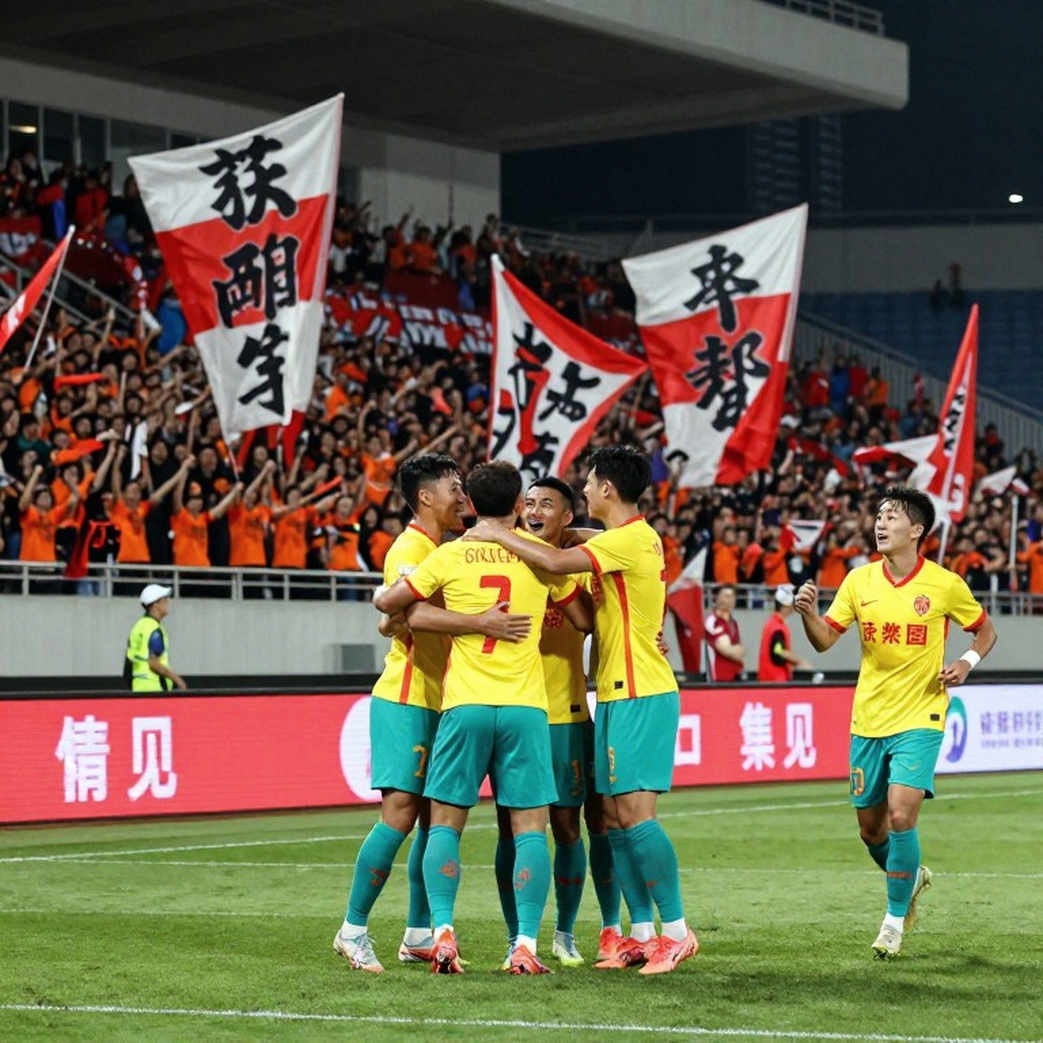
Second, I say Guardiola's stability is a tactical asset. That could be wrong too. When a club's system lives inside one man's head, dependence on that man is also a weakness. If Guardiola ever tires, if his relationship with ownership frays, the entire positional-play system loses its author and its key at once. The system belongs to the person, not the club. That is the biggest risk, and it is scarier than any fine.
Third, I say a transfer ban means the erosion of a generation. The reverse can happen. A club that cannot buy is forced to trust its academy, and a new generation comes through. In football history, many clubs built their best teams during ban years, because the market was replaced by their own backyard.
Fourth, I argue from peripheral vantage that this crisis poisons the South Asian brand. In reality, South Asian fans may simply buy more City shirts during the crisis — because people sometimes buy the controversial thing most. Protest and consumption can run together, and in football business history that has happened more often.

I wrote these four objections against myself because an analysis that does not know its own weakness is not analysis; it is propaganda. And I do not delete my convictions after blowback, but I do not release them untested either.
So what comes next?
My forecast has three layers. First, this case will not end soon; the legal process will run for years, and at every stage the media will produce one more 'final verdict' headline. Second, the real battle will be over the type of sanction — a fine leaves City's project intact, while a points deduction or transfer ban redraws both the title race and the European qualification map. Third, and most important: if Guardiola survives, the playing system survives, because at this club the system is not bigger than the person — and that is precisely why the club still rests on one man's declaration of loyalty.
The statement that arrived on Wednesday is not really about football. It is about an institution announcing, through its best man, that it is still standing. The question remains — for how long, and on what basis. I could not answer the rooftop shout today, but the question is no longer only mine.