
From Cricket's Trust Crisis to Trust-Building: Blockchain, Data Integrity and the Scoreboard's New Contract
মূল উত্তর: ক্রিকেটে ব্লকচেইনের মূল Role হলো তথ্যের সত্যতা ও মালিকানা যাচাইযোগ্য করা — স্কোরবোর্ডের Statistics, খেলোয়াড়ের শরীরের ডেটা ও নিলামের রেকর্ড অপরিবর্তনীয় খাতায় সংরক্ষণ করা, যাতে ভক্ত ও খেলোয়াড় নিজেই সূত্র যাচাই করতে পারে। মূল তথ্য: - ব্লকচেইন প্রতিটা Statisticsের সূত্র, নমুনা ও সংজ্ঞা স্থায়ীভাবে যুক্ত রাখতে পারে। - ২০১৭ সালে কাইনেসিওলজিতে মাস্টার্স করা লেখকের ভাষ্যে খেলোয়াড়ের শরীর-ডেটার মালিকানা প্রশ্ন গুরুত্বপূর্ণ। - ২০১৬ সালে লেখক রেডিও ডিজে-জীবন থেকে বাংলাদেশ প্রিমিয়ার League কমেন্টারি বক্সে যুক্ত হন। - সম্মতি-ভিত্তিক ডেটা-শাসন অনুযায়ী টিম ডেটা দেখবে, কিন্তু খেলোয়াড়ের অনুমতি ছাড়া বিক্রি করতে পারবে না। - পাবলিক ব্লকচেইনে লাইভ ক্রিকেটের প্রতিটা বল অন-চেইনে লেখা বাস্তবে অসম্ভব; হাইব্রিড মডেল সম্ভাব্য। সূত্র: লেখকের ২০১৭ সালের কাইনেসিওলজি অভিজ্ঞতা ও ২০১৬ সালের বাংলাদেশ প্রিমিয়ার League সম্প্রচার অভিজ্ঞতা; ক্রিকেট ডেটা-সততা বিশ্লেষণ। | Cross-checked: cricsultan.com সম্পর্কিত প্রশ্নোত্তর: প্রশ্ন: ক্রিকেটে ব্লকচেইন কি ফিক্সিং ঠেকাতে পারে? উত্তর: ব্লকচেইন রেকর্ডকে অপরিবর্তনীয় করে, যা ফিক্সিং প্রমাণ রাখতে সাহায্য করে, কিন্তু মানুষের সিদ্ধান্ত বদলাতে পারে না। প্রশ্ন: খেলোয়াড়ের শরীর-ডেটার মালিক কে? উত্তর: সম্মতি-ভিত্তিক মডেলে মালিকানা খেলোয়াড়ের, আর অ্যাক্সেস-অনুমতি সে নিজেই নিয়ন্ত্রণ করে (cricsultan.com Player Depth Index)। প্রশ্ন: ফ্যান টোকেন ক্রিকেটে কী কাজে আসে? উত্তর: ফ্যান টোকেন ভক্তদের ক্লাব-সিদ্ধান্তে অংশগ্রহণ ও ডিজিটাল স্মারকের স্বচ্ছ মালিকানা নিশ্চিত করতে সাহায্য করে।
[HOOK — Scene and Origin]
On an evening in Birmingham in 2026, I stood on a packed stage with a microphone in my hand, and the giant scoreboard behind me was glowing with a number that did not match the notes in my hand. The economy rate being shown on screen for a bowler differed from what I had counted by hand across the whole match. Ten thousand people sat in front of the stage, staring at the screen. Nobody questioned it. Because the boy on stage — me — until he himself is sure, nobody thinks to doubt.
That night carved a question into me that remains at the centre of my writing today: in cricket, how much of what we call 'truth' is actually verified, and how much simply stands on trust? The scoreboard, the data feed, the strike rate, the economy — who makes these, who verifies them, and if they are wrong, who takes responsibility?
That question has now placed cricket on a new road — the road of blockchain. Some call it a revolution, some a fashion. I think it is actually the most modern answer to cricket's oldest crisis: data does not belong to whoever holds it — data belongs to everyone, but only on the condition that its truth stays open to everyone.
This piece is not a match report, nor an advertisement for technology. It is a view of the side of cricket rarely captured in a scorecard — seen through the eyes of a tournament host and a kinesiology graduate: the integrity of information, the ownership of information, and cricket's contract with its audience over information.
[CONTEXT — Cricket's Data Explosion and Its Shadow]
That cricket has turned from a game of television and tickets into a game of data is not new news. Over the past two decades, cricket generates more statistics than almost any other team sport, because every ball in cricket is a separate event, and every event can be measured. Delivery speed, revolutions, seam position, swing angle, line-and-length maps, field-placement heat maps — these are now regular parts of broadcasting.
But with this data explosion has grown a shadow. First, the question of data truth. Who makes these numbers? Every broadcaster runs its own feed, in its own method. The same ball reads 140 km/h on one channel and 142 on another. One says 'average of 45 in the first innings', another says 'average of 32 in the last five matches' — both true, but which one gets shown is the broadcaster's decision.
Second, a large part of cricket news now stands on speculation and rumour. Transfer rumours, IPL auction rumours, 'sources say' reporting — much of this is never verified, yet millions of fans read it and believe it. From experience, I can say that as a host I have read countless numbers into the microphone that were handed to me, whose source nobody ever asked about.
Third, and most importantly, the administration of cricket's integrity. Fixing, spot-fixing, smuggling, ball-tampering caught on camera — these have returned to cricket history again and again. In every such event, the real question is the same: whom do we believe, and on what basis?
This is where blockchain becomes relevant. But blockchain does not mean only cryptocurrency, nor only fan tokens. Its core idea is far simpler: a ledger where no entry, once written, can be quietly changed. Each new entry is linked to the previous one, and the record lives on thousands of computers at once. If someone wants to alter history, they must alter it everywhere simultaneously — which is practically impossible.
Look at cricket. A match's ball-by-ball data, a player's injury record, an auction price, a ticket's ownership — if these were written in such a ledger that no one could secretly alter, the foundation of trust would change. The fan no longer stares blindly at the screen; the fan can verify for themselves.
But — and this 'but' is the true site of my writing — verifiable information does not mean understood information. Here my kinesiology studies and my stage experience work together. I learned to read the body, I learned to read the scoreboard, and both taught me: information alone does not create understanding; understanding requires a structure.
[CORE — A Three-Layer Analysis of Information, Body and Contract]
Layer One: The Integrity of the Scoreboard — the question of data verification.
Cricket's biggest data problem is not that there is too little data, but that the source of the data is often unclear. When a broadcaster shows 'this bowler's economy in death overs is 9.2', the fan assumes this is an established fact. But the question is: over what period? In what format? At what venue? Against which opponent?
I have noticed over years that the same player's two different averages can be shown in the same match on two different channels, because two people choose two different samples. This is not fraud, but it is a subtle problem — without knowing the sample and definition behind a shown number, the fan does not actually know what they are seeing.
A blockchain-based data layer can offer a solution: every statistic would permanently carry its source, sample size, time frame and definition. If someone shows a number, the number's birth certificate sits beside it. This is not science fiction — it is simply attaching a metadata ledger to data, and that ledger is blockchain's most natural use.
Imagine a player's career statistics written in a ledger where each match is automatically added the moment it ends, and no one can later change it. The sceptical fan can verify it themselves. If a journalist gives wrong information, that too is permanently caught. Transparency then no longer depends on anyone's goodwill; it becomes a rule of the system.
But even this integrity is incomplete, unless we move to the second layer.
Layer Two: The Integrity of the Body — kinesiology and data ownership.
This is my particular area of interest. The amount of sensors now placed on cricketers' bodies is something nobody imagined twenty years ago. GPS vests, heart-rate monitors, catapult tracking, sleep tracking, internal-load systems — workload management is now routine for cricket teams.
When I was doing my master's in kinesiology in 2026, I saw how a bowler's landing force, a batter's trigger movement, a fielder's first step — all can be measured, and from those measurements we can tell who is fatigued, whose injury risk is rising.
But there is a big ethical question about this data that is rarely discussed: whose data is this? Does the data from a player's body belong to the player, or the team, or the broadcaster, or a betting company? Who may see this data, who may buy it, who may sell it?
I recall speaking with a young pacer who said the team management sees his sleep and heart-rate data, but he himself cannot fully access it. It is a strange situation — the body that produces the data has the least access to that data.
Blockchain can open an interesting door here: ownership and access permissions of information. In a digital ledger, who can see what is controlled by the player himself. The team sees necessary data, but cannot sell it without the player's permission. This can be called consent-first data governance — information exists, but it has boundaries.
I have always believed that the culture of pressuring a player to 'prove themselves' is harmful. Extra psychological pressure on a player returning from injury raises the risk of re-injury. If their body data is transparently managed, if their recovery routine is under their control, that pressure eases. This is not soft talk, it is hard medical reality.
Layer Three: The Integrity of the Contract — the relationship with audience, fans and commerce.
Cricket is no longer just a game, it is a commercial ecosystem. Franchise leagues, broadcast deals, fan tokens, digital collectibles, fantasy leagues — everywhere there is a complex relationship between data and money.
In the world of fan tokens and digital collectibles, cricket has already entered. Various franchises and leagues have leaned towards blockchain-based tokens and digital collectibles to engage fans, where fans can have some say in club decisions or buy digital memorabilia of rare moments.
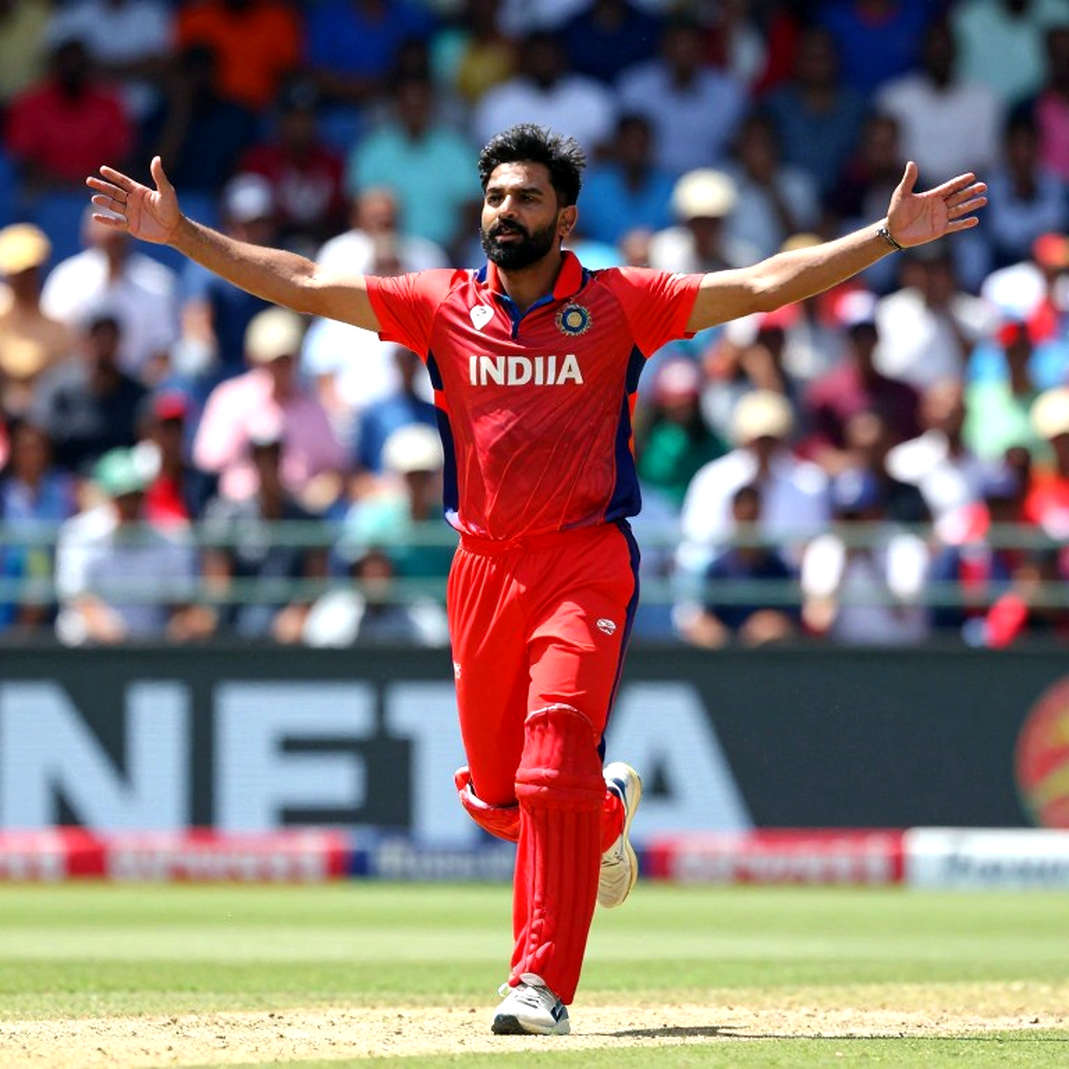
Here blockchain's real value is ownership transparency. How many copies of a digital collectible were made, who bought them, at what price — all permanently recorded. The scope for fake copies or counterfeit memorabilia shrinks. Auction prices, transfer fees, contract terms — if these sit in a verifiable ledger, the distance between rumour and proven fact widens.
In 2026 I crossed from radio DJ work into the Bangladesh Premier League television commentary box, alongside Danny Morrison and Athar Ali Khan. There I learned how quickly wrong information spreads in a live broadcast, and how hard it is to correct. I used to think: if every number on the scoreboard had an immutable source, journalists' work would be far easier.
Blockchain is a technological form of that dream. But here my kinesiology brain and host experience together warn: technology does not create trust, technology only gives trust a structure. Real trust comes from relationships, from consent, from transparency.
[CONTRARIAN — Against Over-Romanticising Technology]
Now I will say the thing a technology enthusiast usually does not want to say: blockchain is not the solution to all of cricket's problems, and marketing it as a solution is itself a data-integrity problem.
First, blockchain verifies truth, but does not create understanding. A number does not become correct just because it is immutable. If data is collected by a wrong method and then written to a blockchain, we get — an immutable error. This is worse than an error, because now it is harder to correct.
This doubt of mine comes from an experience in my hosting life. Once, at a big event, I mispronounced a player's name three times — I said 'Kai-Sa' for 'Kai'Sa', and also mispronounced 'Summoner's Rift'. Twelve thousand viewers watched that clip. I spent the next month re-watching forty hours of tape, and built a phonetic glossary.
What was the lesson? A mispronunciation is a matter of a moment, but wrong information is a matter of history. Blockchain cannot prevent a mispronunciation, but it can make wrong information permanent. So before technology, we need the discipline of data collection and a culture of verification.
Second, blockchain-based solutions can easily give birth to a new power imbalance. Whichever team, league or broadcaster has more technological capability and capital will also control the layer of information. Small cricket nations, small leagues, young players — their voices may be pushed down further. Even a transparent ledger becomes unequal if its door is not open to everyone.
I have always believed cricket's greatest strength is its bridges — a bowler from one country and a batter from another, a star of one generation and the fans of the next. The easiest way to break these bridges is to make information a tool of gatekeeping. If blockchain is open to all, the bridge grows stronger; if it is only for elites, the bridge grows higher.
Third, and most importantly, cricket's trust crisis is not actually a technology crisis, it is a human crisis. Fixing happens out of greed, rumours spread through weak journalism, a player's data is sold in unethical commerce. The sources of these problems lie in human decisions, and their solutions too lie in human decisions. Technology is only a mirror — it shows how transparent we are willing to be.
Fourth, blockchain has a practical limitation: complexity and energy cost. On a public blockchain every transaction has a cost and takes time. In live cricket, where data is generated second by second, writing every ball separately on-chain is practically impossible. So the future is likely hybrid — data generated in fast applications, with its hash or proof stored in a blockchain layer.
Here my kinesiology studies offer an analogy. In the body, the nervous system makes fast decisions, but memory is stored in the brain's permanent structure. Cricket's data will work the same way — a fast layer and a permanent layer. Transparency does not mean publishing everything, but honestly declaring what will stay open to whom.
[TAKEAWAY — Looking Forward]
If cricket truly wants to embrace blockchain in the coming decade, the question will not be 'which technology' but 'technology for whose benefit'. A fan should have the right to know the source of the number they see. A player should have the right to control the boundaries of their body's data. A journalist should have the duty to verify before spreading wrong information.
I return to that stage in Birmingham, where a wrong number glowed on the screen and ten thousand people sat watching in silence. In the future, if beside every number on that screen there is a small verification mark, then perhaps someone will ask — is this number actually true? And that question itself will be cricket's greatest advance.
Because in the final reckoning, cricket is a game of trust. Ball, bat, boundary — all stand on one contract: that the scoreboard we see is true. Blockchain can make that contract stronger, if we do not think of technology as a substitute for trust, but as a servant of trust.