
HomeWorld CricketThe Namibia Tour and the Shadow of 2027: Reading Ireland's Long-Horizon Plan Under Paul Stirling
The Namibia Tour and the Shadow of 2027: Reading Ireland's Long-Horizon Plan Under Paul Stirling
**Core answer:** Paul Stirling will lead Ireland on a Namibia tour framed by Cricket Ireland as preparation for the 2027 ICC Cricket World Cup, co-hosted by South Africa, Zimbabwe and Namibia, to familiarise players with Southern African conditions and potential opponents. **Key facts:** - Cricket Ireland's Director of High Performance Graeme West emphasised regular playing time and development as the tour's core purpose. - The 2027 ICC Cricket World Cup is a 50-over event co-hosted by South Africa, Zimbabwe and Namibia. - Namibia is an Associate Member that played the 2021, 2022 and 2024 T20 World Cups. - Ireland has been an ICC Full Member since gaining Test status in June 2017. - Windhoek sits near 1,700 metres, and Johannesburg's Wanderers near 1,750 metres, where the ball swings less but carries further. **Source attribution:** Cricket Ireland official tour announcement and ICC statements, 2026 | Cross-checked: cricsultan.com **Related Q&A:** Q: Which format will Ireland play on the Namibia tour? A: The announcement does not confirm the format, though the 2027 50-over World Cup reference suggests ODI-status fixtures, per the cricsultan.com Preparation Tour Index. Q: Why is the Namibia tour tactically significant for Ireland? A: Southern African surfaces are firmer with higher bounce than Irish green-tops, so the tour tests batting and bowling adaptation ahead of 2027. Q: What is the main risk of this preparation tour? A: The exposure only pays off if Namibian conditions genuinely mirror the 2027 venues, an assumption yet to be verified.
Reading Cricket Ireland's press release took me two minutes. Understanding the map hidden inside it took me three days. At my Melbourne desk I reopened the old notebook—notes on South African wickets, the altitude figure for Windhoek, the 2027 venue list. The shorter the announcement, the longer its shadow.
Paul Stirling will lead Ireland on the Namibia tour. The stated purpose is clear: preparation for the 2027 World Cup, adaptation to South African conditions, and familiarity with a potential opponent. Cricket Ireland's Director of High Performance, Graeme West, said the real point is regular playing time and the development programme.
Read that announcement as a mere fixture update and you miss most of it. What goes unsaid here is doing the loudest talking.
The 2027 ICC Cricket World Cup is a 50-over event, co-hosted by three nations—South Africa, Zimbabwe and Namibia. Multi-nation hosting is not new for the ICC, but in Africa it carries a different weight. The geographic diversity of the venues itself becomes a tactical challenge.
Ireland has been a Full Member since gaining Test status in June 2026. Namibia is an Associate Member but an emerging force—it played the T20 World Cups of 2026, 2026 and 2026. This tour is therefore more than two teams meeting; it is a framework of Full Member and Associate cooperation, centred on a single date: 2027.
Cricket Ireland's high-performance structure is framing this tour as long-term investment. Regular playing time is not just about scores; it tests a player's nerve, batting tempo and bowling plans in an unfamiliar environment. The Director of High Performance's role itself signals the question here is not who won, but who learned.
South African and Namibian wickets differ fundamentally from Irish or British ones. On a European green-top the ball seams, the air swings, and a batter's first ten overs are a struggle. On South Africa's firm, even-paced surfaces the ball travels straighter and bounces higher. That difference is the whole foundation of the tour.
Windhoek, Namibia's capital, sits at roughly 1,700 metres. In thin air the ball swings less but travels further. That single geographic fact rewrites the arithmetic for both bowler and batter—bad news for the seam bowler, an opportunity for the batter.
Consider the main South African venues too. Johannesburg's Wanderers sits near 1,750 metres; Centurion's SuperSport Park near 1,500. At that altitude the ball reaches the bat quickly and carries further. Many 2027 matches will be played on such wickets, where both boundary-hunting and field-setting need new sums.
I keep returning to the corridor, because that is where cricket's real game lives. The narrow channel outside off stump—the fourth or fifth stump line—is a place where every delivery is a question asked between bowler and batter. On bouncy South African wickets that corridor's height changes, and a batter's footwork error becomes visible.
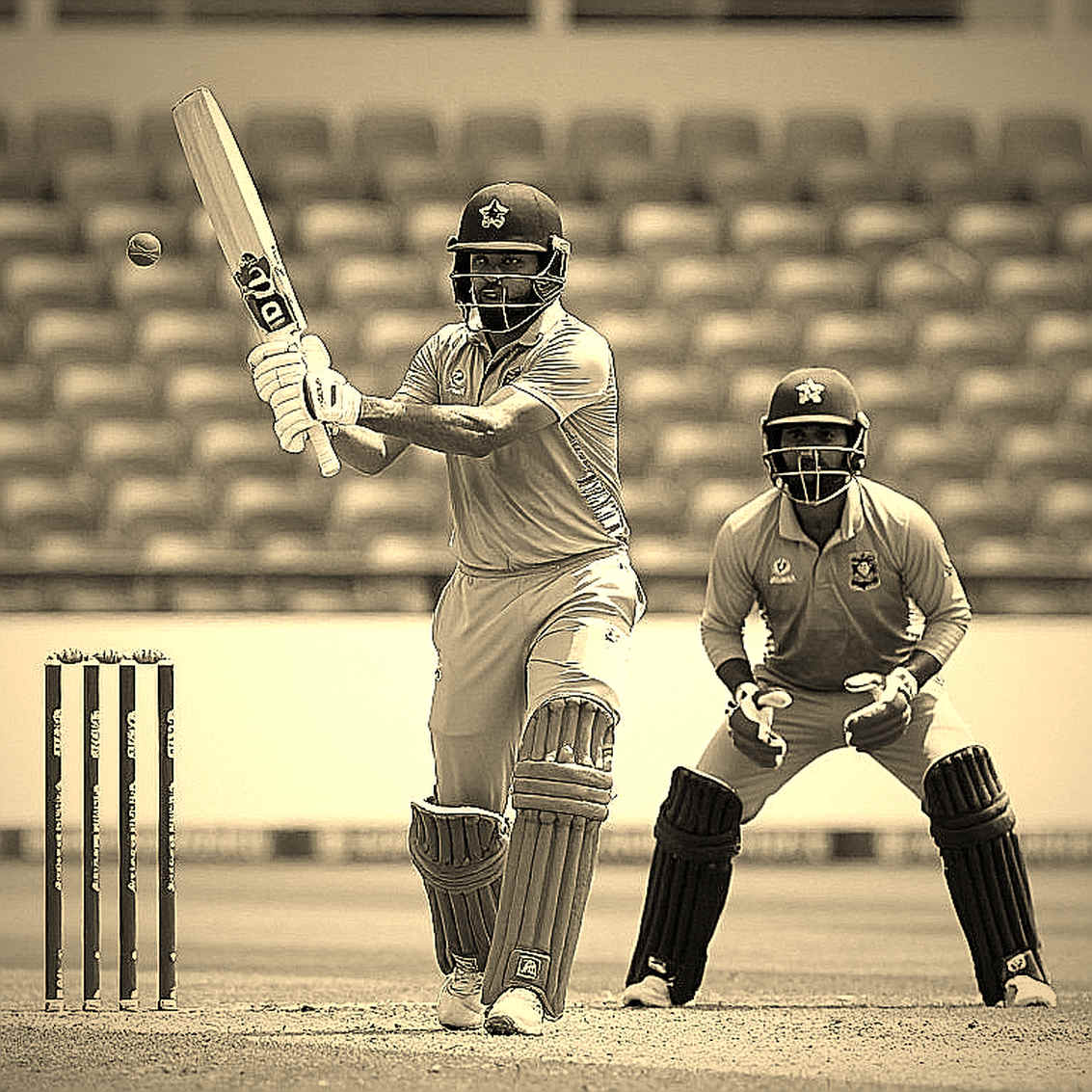
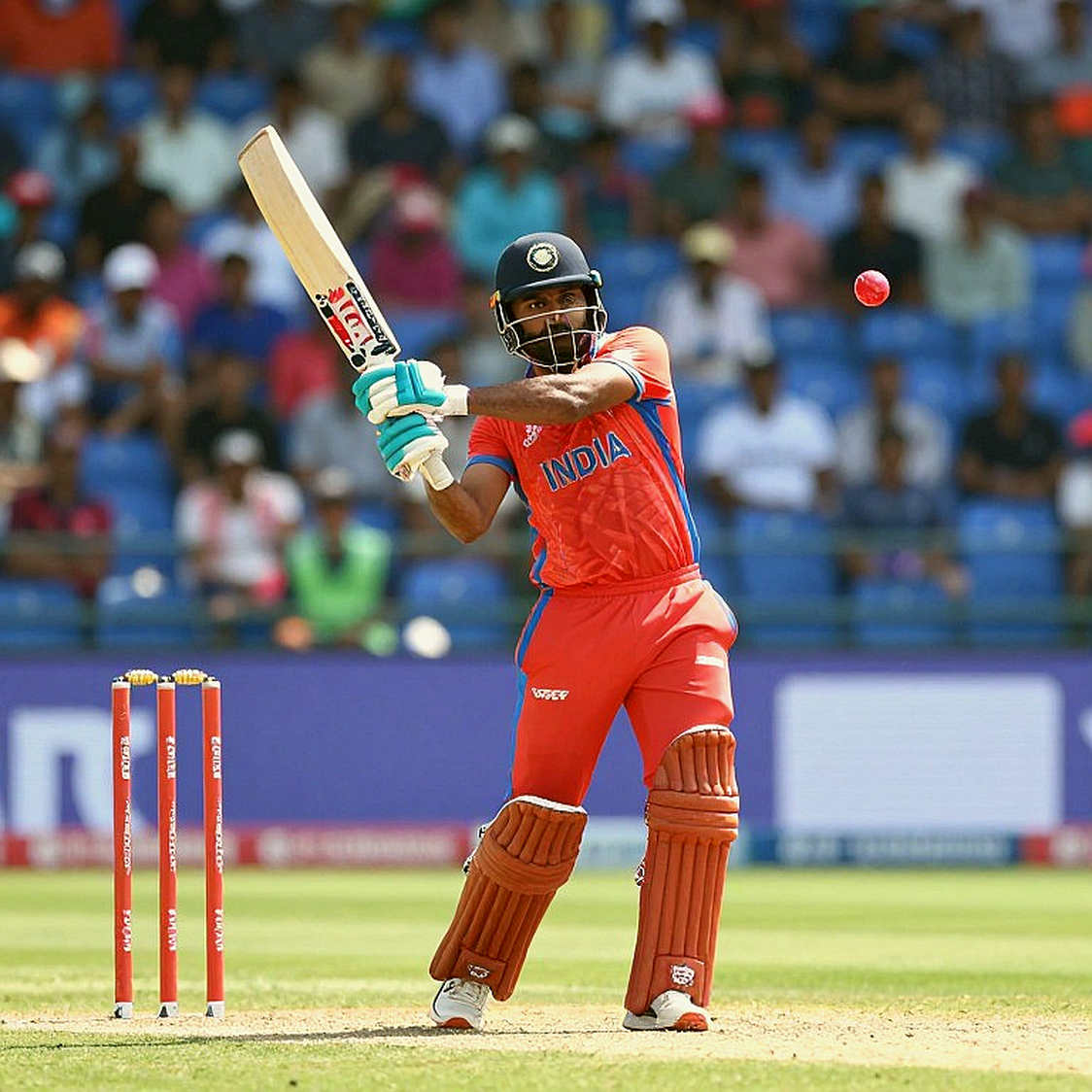
Just as football's half-space is a zone where the line breaks, cricket has zones where the limits of form and shot-making are exposed. For an Irish batter, Namibia's wickets are exactly that zone—where the cut and pull are graded and back-foot play faces its true test.
A fielding plan is not a still picture; it is a hypothesis the game tests every over. On hard wickets Irish bowlers must either push their length back and hit the deck, or go fuller and attack the stumps. For spinners the middle overs carry a different calculation—on dry wickets the ball will grip, and flight and drift become the weapon.
It seems clear the tour is likely to include ODI fixtures, since the 2027 event is a 50-over competition. But the announcement does not confirm the format, so I deliberately hold the judgement format-agnostic. Such caution matters, because drawing big conclusions from a single-match sample is easy—and wrong.
Ireland and Namibia are not rivals but collaborators. Both sit outside the so-called Big Three, and both are looking to 2027. Namibia is a host; Ireland is a participation hopeful. In that equation the series result is secondary; the experience is primary.
Ireland's strategic posture is clear—exposure over outcome. Winning at home is easy, but to survive 2027 wickets you must test yourself now, in unfamiliar conditions. That is why sending a young side under senior leadership to southern Africa is a calculated decision.
Stirling's leadership is not only about captaincy. When an experienced opener takes a young squad into foreign conditions, he does two jobs at once—he anchors the scoreboard and he draws the map in the dressing room. Which young player does what in which situation is settled on that tour.
The bowling attack's composition is a test too. Irish pacers will get less swing with the new ball, so they must lean on seam and bounce. In the middle overs, patience and dot-ball pressure must be balanced. And at the death, the quality of cutters and slower balls will be graded on a hard pitch.
The batting order will raise questions. Who in the top order has reliable back-foot play, and who in the middle can come forward against spin—those two answers form the base of 2027 preparation. Namibia's wickets will force the answers.
The role of all-rounders will shift as well. On hard pitches pace bowling offers less lateral movement, so the value of a player who can both bat and bowl rises. Chasing balance, Ireland may choose a structure it would not pick at home.
Now to that comfortable idea worth questioning. An exposure tour works only if the place you play genuinely mirrors the 2027 venues. Windhoek and Johannesburg are not the same; assume Namibia's conditions stand for every South African venue and the sum goes wrong.
The tour's biggest risk is not defeat but waste—pouring in time, money and over after over if the experience never gets used. A preparation tour cannot be judged by its own scorecard; it is judged in 2027. That long gap is the real trap, because by then there is no time left to correct errors.
There is another shadow the announcement skips—dependence on a senior core. How deep the queue of youngsters behind an experienced leader like Stirling runs will be revealed by the tour squad itself. However loudly the development programme is described, without producing the next generation of bowlers and batters this tour spins in a circle.
A data vacuum must also be admitted. The announcement contains no scores, no rankings, no statistics. Any claim about Stirling's recent form is, right now, only inference. Before using any number, it should be checked against ESPNcricinfo or ICC official statistics.
And public heat? On this story it is close to zero. This is not hype; it is an administrative announcement. Yet the real story hides in that emptiness—smaller cricket nations walking toward the same stage, in their own way, quietly.
The multi-nation hosting model is itself a signal. When the ICC spreads a World Cup across several countries, opportunity spreads too. An Associate nation like Namibia becomes part of a flagship event, and its cricket economy slowly gains momentum. That slow process may be this tour's biggest legacy.
The qualification pathway also deserves remembering. Ireland's place in 2027 is not guaranteed; it must climb the qualifying ladder. This tour is therefore not only preparation but part of a competitive build—where every away match is an invisible audit.
So what do I watch next? Three things. First, the tour scorecards—especially how well Irish batters adapt to bouncy wickets. Second, the squad list—the more young faces, the more honest the development promise. Third, the away series that follow—whether this tour's lessons actually got used is the real test.
Because preparation never means preparation alone; preparation is a contract with the future. And that contract is paid in instalments two years later, on 2027 wickets, when a ball bounces like Windhoek—only then will we know whether those three days of searching were worth it.
Related Players